Factory Automation Equipment in China: Tips for Selecting Automation Equipment
Factories use automation to improve production consistency. China has a broad manufacturing ecosystem that produces equipment for different industrial applications.
Factory automation combines machinery, electronic controls, sensors, robotics, and software to manage manufacturing activities. These technologies help industrial facilities coordinate production processes, monitor operations, and reduce repetitive manual tasks.
Importance of Factory Automation Equipment
Factory automation equipment plays an important role in modern manufacturing. It supports production planning, material movement, quality monitoring, and equipment coordination across different industrial environments.
Manufacturers consider automation when production activities require consistent output, controlled processes, or continuous operation. China has developed manufacturing capabilities across several automation categories, making it an important source of industrial machinery and integrated production technologies.
Production Efficiency and Consistency
Automated machinery can perform repeated operations according to programmed instructions. This helps maintain consistent production procedures and reduces variations associated with repetitive manual activities.
Operational Monitoring
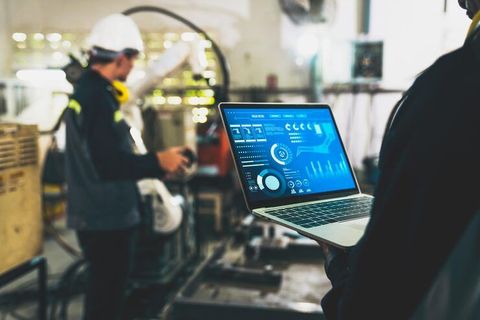
Sensors and control systems collect information about machine performance, temperature, pressure, speed, and production conditions. Operators can use this information to identify irregularities and understand equipment performance.
Workplace Safety
Automation can perform certain repetitive or physically demanding operations. Industrial robots and automated material-handling systems can also reduce direct human involvement in selected manufacturing activities.
Types of Factory Automation Equipment Available in China
China's industrial equipment sector covers different technologies used in manufacturing facilities. The required equipment depends on production volume, materials, product design, and operational complexity.
Industrial Robots and Robotic Systems
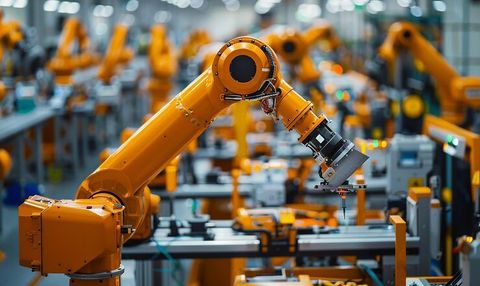
Industrial robots perform activities such as welding, material handling, packaging, painting, and assembly. Industrial robot systems China manufacturers produce include articulated robots, collaborative robots, and specialized robotic equipment.
PLC Control Systems
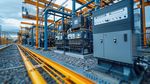
Programmable Logic Controllers (PLCs) manage machinery through programmed instructions. PLC control systems price China searches commonly reflect interest in controllers, input-output modules, communication interfaces, and control cabinets.
Conveyor and Material Handling Equipment
Factory conveyor automation equipment moves materials between production stations. Common configurations include belt conveyors, roller conveyors, chain conveyors, and automated guided transport systems.
CNC Automation Equipment
CNC machinery uses computer-based instructions to control manufacturing operations. A CNC automation equipment supplier may provide loading systems, robotic machine tending, automatic tool changers, and production monitoring components.
Key Equipment Categories and Applications
Different automation technologies support specific manufacturing requirements. The following table summarizes common equipment categories and their industrial applications.
Equipment category | Main application |
|---|---|
Industrial robots | Welding, assembly, and handling |
PLC controllers | Machine and process control |
Conveyor systems | Material transportation |
CNC automation | Precision machining |
Vision inspection systems | Product quality inspection |
Automated packaging | Filling, sealing, and labeling |
Sensor systems | Measurement and monitoring |
These categories can operate independently or as connected components within an integrated manufacturing environment.
Selecting China Factory Automation Suppliers
Choosing suitable equipment requires an understanding of technical requirements and manufacturing capabilities. China factory automation suppliers operate across different equipment categories, so comparing specifications is important.
Manufacturer Capabilities
Review the manufacturer's experience with the relevant machinery category. Examine technical documentation, production capabilities, previous installation examples, and available engineering support.
Technical Specifications
Before evaluating industrial automation equipment manufacturers China, consider the following details:
Production capacity and operating speed.
Machine dimensions and installation requirements.
Electrical specifications and control architecture.
Compatibility with existing machinery.
Safety features and operating conditions.
Maintenance requirements and replacement components.
Pricing and Configuration
PLC control systems price China and automated machinery quotations can vary according to configuration, automation level, components, and customization requirements.
Comparing equipment specifications alongside quoted prices helps businesses understand differences between available configurations. Additional considerations include transportation, installation, testing, and operator training.
Recent Developments in Factory Automation
Factory automation technologies continue to incorporate digital monitoring, artificial intelligence, and connected industrial systems. These developments are changing how manufacturing facilities manage equipment and production information.
Smart Manufacturing Integration
Industrial Internet of Things (IIoT) technology connects machines, sensors, and monitoring platforms. This allows production information to be collected and reviewed through centralized systems.
Artificial Intelligence Applications
AI-based inspection systems can analyze product images and identify selected manufacturing defects. Predictive maintenance technologies also examine equipment information to identify unusual operating patterns.
Integrated Production Lines
Automated production line equipment China manufacturers develop can combine robotic stations, conveyors, inspection equipment, and centralized controllers. These systems coordinate multiple production stages within one manufacturing environment.
Challenges When Integrating Automation Equipment
Automation integration requires technical planning and coordination. Businesses may encounter several challenges during installation and operation.
Compatibility: Existing machinery may require electrical, mechanical, or software modifications.
Technical skills: Operators need appropriate training to manage automated systems.
Maintenance: Sensors, controllers, motors, and mechanical components require periodic inspection.
Production interruptions: Installation and testing may temporarily affect manufacturing schedules.
System integration: Different equipment platforms may require compatible communication protocols.
Evaluating these factors before installation helps organizations prepare for operational changes.
Frequently Asked Questions
What factory automation equipment is manufactured in China?
China manufactures industrial robots, PLC controllers, conveyor systems, CNC automation machinery, inspection equipment, packaging machines, and automated assembly systems.
How can businesses identify industrial automation equipment manufacturers in China?
Businesses can review manufacturer specifications, technical certifications, production capabilities, equipment documentation, and previous industrial installations.
What affects factory automation equipment prices in China?
Prices depend on machinery specifications, automation complexity, production capacity, component selection, customization, and installation requirements.
What is included in an automated production line?
An automated production line may include conveyors, robotic stations, sensors, PLC controllers, inspection equipment, and centralized monitoring software.
Is customized factory automation equipment available in China?
Yes. Manufacturers may develop custom factory automation solutions China based on production requirements, machinery compatibility, product dimensions, and operational processes.
Conclusion
Factory automation equipment supports modern manufacturing through robotics, programmable controllers, conveyor systems, and integrated production technologies. China provides a wide range of industrial automation equipment for different manufacturing applications.
Understanding equipment specifications, manufacturer capabilities, integration requirements, and maintenance considerations helps businesses evaluate suitable automation systems. Careful technical assessment also supports more organized manufacturing operations and long-term equipment planning.