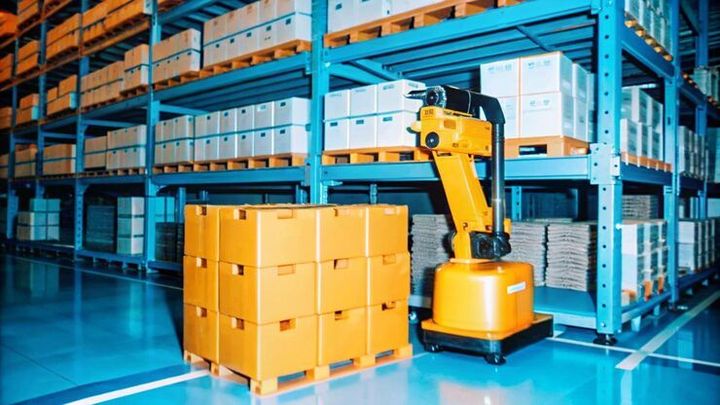
Automated Guided Pallet Systems: A Guide to Warehouse Automation and Integration
Automated Guided Pallet Systems are an important part of modern industrial automation and material handling operations.
Unlike manually operated forklifts, AGV pallet transport systems follow programmed routes or navigation instructions. They can move materials between storage areas, production stations, loading zones, and packaging departments.
An automated pallet handling system generally includes vehicles, navigation technology, control software, charging equipment, and safety components. These elements work together to coordinate material movement within an industrial environment.
Importance of Automated Pallet Handling
Material transportation is an important part of warehouse and manufacturing operations. Moving pallets manually can involve repetitive activities, vehicle coordination, and careful route management.
Automated guided vehicle pallet systems help organize these activities through programmed transportation processes. Their importance can be understood through several operational factors.
Consistent movement: Automated vehicles follow defined instructions for transporting palletized materials.
Workflow coordination: Systems can connect storage locations with production and distribution areas.
Reduced manual handling: Employees can focus on supervision, inventory coordination, and other operational responsibilities.
Space management: Carefully planned vehicle routes can support organized warehouse movement.
Operational visibility: Connected software can provide information about vehicle locations and transportation activities.
However, the actual results depend on facility design, equipment configuration, maintenance practices, and operating conditions.
How Automated Guided Pallet Systems Work
Navigation and Movement Technology
Automated pallet transportation systems use different navigation methods to determine vehicle positions and movement routes.
Common technologies include:
Laser navigation: Sensors identify reference points to calculate vehicle positions and follow programmed routes.
Magnetic guidance: Magnetic strips or markers provide directional information along designated paths.
QR code navigation: Floor-mounted visual markers help vehicles identify locations and movement instructions.
Natural navigation: Sensors and mapping software help vehicles navigate using surrounding environmental features.
The appropriate technology depends on warehouse conditions, route flexibility, accuracy requirements, and installation considerations.
Pallet Loading and Transportation
An automated pallet mover typically uses lifting forks or another suitable handling mechanism to collect and transport pallets. After receiving an instruction, the vehicle travels toward the assigned collection point.
The vehicle positions itself near the pallet, performs the required lifting operation, and moves toward its destination. Sensors and control systems help monitor movement and detect obstacles.
After reaching the destination, the vehicle places the pallet in the designated location and becomes available for another transportation task.
Applications Across Industrial Facilities
Automated guided pallet systems support several material-handling activities across different industries.
Warehousing and distribution: AGVs transport pallets between receiving areas, storage racks, picking stations, and dispatch zones.
Manufacturing facilities: Automated vehicles move raw materials, components, and finished products between production departments.
Food and beverage operations: Suitable pallet transportation equipment can support organized movement between packaging, storage, and distribution areas.
Automotive manufacturing: AGV systems transport components and assembled materials between designated production locations.
Pharmaceutical manufacturing: Properly configured equipment can support controlled material movement within facilities that follow specific operational and hygiene requirements.
Equipment Components and System Comparison
An industrial pallet automation equipment setup contains several important components. Each component contributes to transportation, navigation, or operational coordination.
| Component | Primary Function |
|---|---|
| AGV vehicle | Transports palletized materials |
| Navigation sensors | Identify routes and surrounding obstacles |
| Lifting mechanism | Raises and positions pallets |
| Control software | Coordinates vehicle instructions |
| Battery system | Supplies electrical power |
| Safety equipment | Supports controlled vehicle operation |
Different vehicle configurations are available depending on pallet dimensions, load capacity, lifting height, and transportation requirements.
Factors for Selecting an Automated Pallet System
Choosing an appropriate automated pallet handling system requires an understanding of the facility's operational requirements.
Important Evaluation Factors
Payload capacity: Check the maximum pallet weight and load dimensions supported by the vehicle.
Navigation method: Evaluate whether fixed routes or flexible navigation are suitable for the facility.
Warehouse layout: Consider aisle widths, floor conditions, storage arrangements, and turning spaces.
Battery performance: Review charging requirements, operating duration, and battery replacement considerations.
Software integration: Examine compatibility with warehouse management and manufacturing execution systems.
Equipment specifications: Compare vehicle dimensions, lifting mechanisms, safety features, and technical documentation.
When evaluating AGV pallet system suppliers and automated pallet mover manufacturers, reviewing equipment specifications, technical support arrangements, maintenance requirements, and installation experience can help clarify system suitability.
Safety and Maintenance Considerations
Automated pallet transportation requires appropriate safety planning. Facilities should establish designated vehicle routes, pedestrian crossing areas, speed restrictions, and emergency procedures.
Common safety features include obstacle detection sensors, emergency stop controls, warning indicators, and automatic braking functions. Their availability and configuration vary between equipment models.
Regular maintenance is also important. Inspection activities may include checking batteries, wheels, lifting mechanisms, sensors, electrical connections, and navigation components.
Employees responsible for operating or supervising automated equipment should receive suitable training based on the manufacturer's instructions and facility procedures.
Frequently Asked Questions
What are automated guided pallet systems?
They are automated transportation systems that use guided vehicles to collect, move, and position palletized materials within industrial facilities.
What is the difference between AGVs and AMRs?
AGVs generally follow predefined routes or structured navigation instructions. Autonomous mobile robots (AMRs) typically use mapping and environmental sensing to navigate more dynamically.
What factors influence automated pallet system pricing?
Pricing depends on vehicle capacity, navigation technology, software integration, battery configuration, installation requirements, and the number of vehicles.
Where are automated pallet transportation systems used?
They are commonly used in warehouses, manufacturing plants, distribution centers, automotive facilities, and other industrial environments.
How often should automated pallet equipment be maintained?
Maintenance frequency depends on operating hours, equipment specifications, environmental conditions, and manufacturer recommendations.
Conclusion
Automated guided pallet systems provide a structured approach to material transportation in modern industrial facilities. Their capabilities include programmed movement, pallet handling, navigation, and coordination with warehouse operations.
Understanding vehicle specifications, navigation methods, safety features, and integration requirements helps organizations evaluate suitable equipment configurations. Careful planning and regular maintenance remain important for reliable operation.