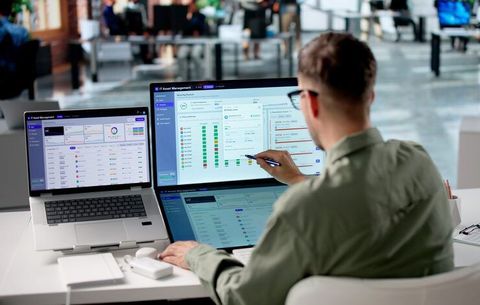
Accounts Payable Automation Software Overview With Invoice Processing and Payment Insights
Accounts payable automation software is a digital financial management technology designed to simplify how organizations receive, review, approve, and process invoices. It helps businesses manage payments owed to suppliers, vendors, contractors, and other business partners through organized digital workflows.
Instead of depending entirely on paper invoices, spreadsheets, and manual data entry, organizations can use automated systems to manage financial transactions more efficiently.
Accounts payable, commonly known as AP, is an important part of business accounting. Whenever an organization receives products, materials, equipment, or professional assistance from another company, it generally receives an invoice that must be checked and paid according to agreed terms. Managing hundreds or thousands of invoices manually can create administrative difficulties, particularly for organizations with multiple departments and suppliers.
Accounts payable automation software addresses these challenges by combining invoice processing, document recognition, approval workflows, accounting integrations, and payment tracking. These systems help finance departments organize financial information while maintaining records of transactions.
How Accounts Payable Automation Software Developed
Traditional accounts payable processes depended on physical documents, email communication, manual verification, and spreadsheet-based tracking. Employees had to enter invoice information, compare documents with purchase orders, obtain approvals, and update accounting records.
As business operations became increasingly digital, organizations began adopting electronic invoicing and accounting platforms. Modern accounts payable automation software developed from these technologies by connecting different financial activities within one digital environment.
Main Components of AP Automation Software
Most platforms include several connected functions:
Invoice capture: Collects invoice information from digital documents, email attachments, and other supported sources.
Data extraction: Identifies invoice numbers, supplier information, transaction amounts, and payment terms.
Invoice matching: Compares invoices with purchase orders and delivery records.
Approval management: Routes invoices to authorized employees for review.
Payment processing: Supports payment preparation and integration with financial systems.
Reporting and analytics: Provides information about outstanding invoices, payment activity, and financial obligations.
These components create a structured process that helps accounting teams manage payable transactions.
Importance
Accounts payable automation software matters because businesses need accurate financial records and organized payment procedures. Delayed invoice processing, missing documents, duplicate entries, and approval difficulties can affect relationships with suppliers and create additional administrative work.
For small organizations, managing invoices manually may initially appear manageable. However, as transaction volumes increase, tracking payment obligations across spreadsheets and email conversations becomes more complicated.
Who Uses Accounts Payable Automation Software?
Different types of organizations use AP automation technology according to their operational requirements.
Small businesses: Organize supplier invoices, maintain transaction records, and monitor upcoming payments.
Medium-sized companies: Coordinate approvals across departments and manage increasing invoice volumes.
Large enterprises: Handle complex financial workflows involving multiple locations, subsidiaries, and suppliers.
Manufacturing companies: Process invoices associated with raw materials, machinery, transportation, and production activities.
Healthcare organizations: Organize invoices from equipment suppliers, pharmaceutical distributors, and administrative vendors.
Educational institutions: Manage payments associated with facilities, technology, educational materials, and institutional operations.
Common Problems Addressed by Invoice Automation
Manual accounts payable procedures can create several operational challenges.
Data entry errors: Employees may accidentally enter incorrect invoice numbers, amounts, or supplier details.
Delayed approvals: Invoices can remain pending when the responsible employee is unavailable.
Duplicate invoices: Repeated documents may enter the accounting process without proper identification.
Limited payment visibility: Finance teams may struggle to identify upcoming obligations and outstanding transactions.
Document management difficulties: Paper records and scattered email attachments can make historical information difficult to locate.
Automation helps address these issues through document organization, validation procedures, and centralized transaction records.
Manual Accounts Payable vs Automated Processing
Process | Manual Accounts Payable | Automated Accounts Payable |
|---|---|---|
Invoice collection | Email and physical documents | Digital document capture |
Data entry | Employee-based entry | Automated data extraction |
Invoice verification | Manual comparison | Rule-based matching |
Approval | Email or paper circulation | Digital approval workflows |
Payment tracking | Spreadsheets and accounting records | Centralized payment monitoring |
Reporting | Manual report preparation | Automated reporting tools |
Record storage | Physical and digital folders | Organized digital records |
The actual capabilities of automated systems depend on their configuration, integrations, and organizational requirements. Human review may still be necessary for unusual invoices, disputed transactions, and incorrect information.
Recent Updates
Accounts payable automation software continues to develop alongside artificial intelligence, cloud computing, digital invoicing, and financial data integration. Recent industry developments from 2024–2026 show increasing interest in connected financial operations rather than isolated invoice-processing applications.
Artificial Intelligence in Invoice Processing
Artificial intelligence is increasingly used to identify information within invoices and recognize document patterns. Machine learning technologies can help systems interpret different invoice layouts and extract relevant information.
Some platforms also use AI-assisted classification to identify invoice categories, recognize potential duplicate documents, and highlight information that requires additional review.
However, extracted information may contain errors, especially when documents are unclear or incomplete. Human verification remains important for financial accuracy.
Cloud-Based AP Automation Platforms
Cloud-based accounting technology allows authorized employees to access financial information through internet-connected devices. This supports organizations with distributed accounting teams and multiple business locations.
Common cloud capabilities include:
Centralized invoice storage.
Remote approval management.
Digital audit records.
Financial reporting dashboards.
Integration with accounting applications.
Cloud platforms also require appropriate access controls, data protection procedures, and system monitoring.
Electronic Invoicing and Digital Payments
Electronic invoicing is becoming an important part of modern financial operations. Instead of relying entirely on scanned documents, organizations can exchange structured invoice information between compatible financial systems.
Digital payment integration also helps finance teams connect invoice approval with payment preparation and transaction monitoring.
Important Technology Developments
Technology | Application in Accounts Payable |
|---|---|
Artificial Intelligence | Invoice recognition and document classification |
Optical Character Recognition | Extracting information from scanned invoices |
Machine Learning | Identifying patterns and potential irregularities |
Cloud Computing | Remote access to financial information |
API Integrations | Connecting accounting and banking platforms |
Data Analytics | Monitoring payment patterns and invoice activity |
These technologies are changing how organizations manage financial documentation, although implementation requirements vary between industries and accounting environments.
Laws or Policies
Accounts payable automation software must operate within the financial, accounting, taxation, privacy, and electronic transaction requirements applicable to an organization's jurisdiction.
Since organizations may process invoices across international markets, compliance requirements can differ according to business location, supplier location, transaction type, and applicable tax rules.
Electronic Invoicing and Tax Compliance
Electronic invoice regulations establish requirements for creating, exchanging, storing, and reporting invoice information. Some jurisdictions require structured electronic invoices or digital reporting through approved systems.
Organizations using AP automation software should consider whether their platforms support relevant invoice formats, tax identification details, transaction classifications, and record-retention requirements.
Accounting and Financial Recordkeeping
Businesses generally need to maintain reliable records of financial transactions. Accounts payable systems can support these requirements by maintaining invoice copies, approval histories, payment information, and transaction references.
Important recordkeeping considerations include:
Accurate supplier identification.
Correct invoice amounts and tax information.
Document retention according to applicable rules.
Records of invoice approval and payment authorization.
Appropriate controls over financial information.
Data Protection and Cybersecurity
Invoice documents may contain confidential business information, supplier banking details, employee information, and transaction records.
Organizations should consider applicable data protection requirements and cybersecurity practices when selecting an automation platform.
Important safeguards include role-based access, secure authentication, encryption, activity monitoring, and appropriate data backup procedures.
Internal Financial Controls
Automation does not remove the need for financial oversight. Organizations should establish clear approval responsibilities and separate important financial activities where appropriate.
For example, the employee entering an invoice may not be the same person authorized to approve its payment. Such controls help reduce unauthorized transactions and improve accountability.
Tools and Resources
Several categories of financial technology tools help organizations understand, implement, and manage accounts payable automation.
Invoice Processing Software
Invoice processing platforms help collect documents, extract information, validate invoice details, and organize approval procedures.
Examples include:
SAP Concur Invoice: Supports invoice management and financial workflow activities.
Tipalti: Provides accounts payable and supplier payment management capabilities.
BILL: Supports invoice processing, financial workflows, and payment management.
Coupa: Includes spend management and accounts payable capabilities.
Microsoft Dynamics 365 Finance: Provides enterprise financial management and payable accounting functions.
Different platforms have different integration options, automation capabilities, reporting features, and operational requirements.
Accounting and Enterprise Resource Planning Systems
Accounting software and enterprise resource planning systems help organizations maintain financial records across departments.
Platforms such as Oracle NetSuite, SAP S/4HANA, and Microsoft Dynamics 365 Finance connect accounts payable activities with other financial functions, including general ledger accounting, procurement, and financial reporting.
Invoice Management Templates
Spreadsheet-based templates can help smaller organizations understand their payable activities before implementing a dedicated automation platform.
Useful template fields include:
Invoice reference number.
Supplier name.
Invoice receipt date.
Invoice due date.
Purchase order reference.
Invoice amount.
Approval status.
Payment status.
These fields provide a structured overview of outstanding financial obligations.
Payment Tracking and Reporting Tools
Payment dashboards help accounting teams monitor invoice status and identify upcoming financial obligations.
Common reporting indicators include:
Financial Indicator | What It Measures |
|---|---|
Invoice processing time | Time required to process an invoice |
Outstanding invoices | Number of unpaid invoices |
Average payment time | Average period between invoice receipt and payment |
Duplicate invoice rate | Frequency of repeated invoice records |
Approval time | Time taken to authorize invoices |
Overdue invoice percentage | Share of invoices remaining unpaid after their due dates |
These measurements help organizations understand their accounts payable activities and identify areas that require operational improvements.
FAQs
What Is Accounts Payable Automation Software?
Accounts payable automation software is a financial technology system that helps organizations manage invoice collection, document verification, approval workflows, payment tracking, and accounting records through digital processes.
How Does Automated Invoice Processing Work?
Automated invoice processing generally involves collecting an invoice, extracting its information, checking relevant details, routing it for approval, and recording its payment status. Employees may need to review exceptions or incorrect information.
What Are the Main Features of AP Automation Software?
Common features include invoice capture, OCR technology, duplicate detection, purchase order matching, approval management, accounting integration, payment tracking, and financial reporting.
Can Accounts Payable Automation Software Integrate With Accounting Systems?
Yes. Many AP automation platforms integrate with accounting and enterprise resource planning systems through APIs or built-in connectors. Integration capabilities depend on the software and the organization's existing financial infrastructure.
Is Accounts Payable Automation Suitable for Small Businesses?
Yes. Small businesses can use accounts payable automation to organize supplier invoices, monitor payment obligations, reduce repetitive data entry, and maintain digital financial records. The appropriate system depends on invoice volume, accounting requirements, and operational complexity.
Conclusion
Accounts payable automation software provides a structured approach to invoice processing, financial approvals, and payment monitoring. Artificial intelligence, cloud computing, electronic invoicing, and accounting integrations are expanding its capabilities. Organizations must also consider financial controls, data protection, and applicable accounting regulations. Understanding these technologies helps explain how digital accounts payable systems support modern financial administration.