Robotics and Automation Guide With Smart Manufacturing and Industry Insights
Robotics and automation are important parts of modern manufacturing, logistics, agriculture, healthcare, transportation, and many other industries. Robotics focuses on machines that can perform physical tasks, while automation refers more broadly to systems that carry out processes with limited human intervention. Together, they form a major part of the move toward smart manufacturing.
The roots of industrial automation go back to mechanized production and control systems developed during the Industrial Revolution. Modern robotics developed much later, with programmable industrial machines becoming increasingly common in factories during the second half of the twentieth century. Today, computers, sensors, artificial intelligence, cameras, software, and connected equipment allow automated systems to handle increasingly varied tasks.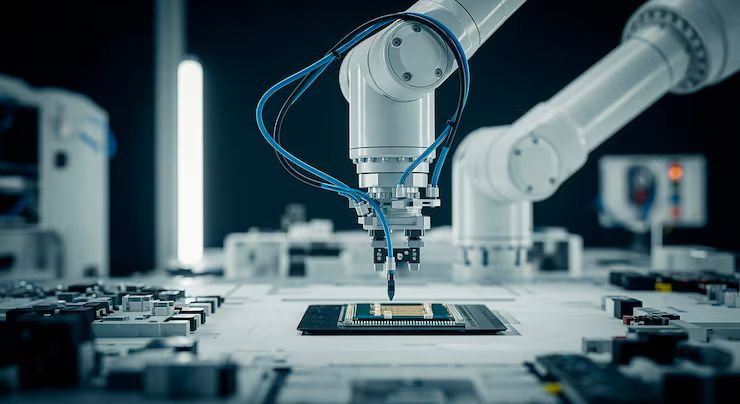
A robotics and automation system can range from a simple machine that repeatedly moves an item between two points to a connected production cell that monitors equipment, checks products, and adjusts operations according to collected data. The purpose is generally to make industrial processes more consistent, measurable, and adaptable.
Main Components
A typical automated production system can contain several connected elements:
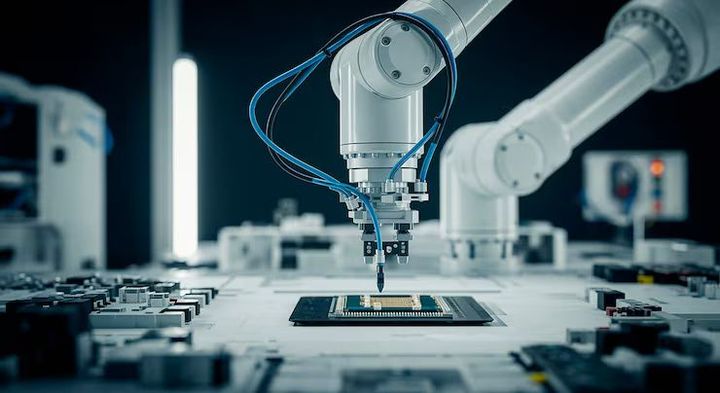
- Robots that perform physical movements such as picking, placing, welding, assembly, or palletizing.
- Sensors that detect position, temperature, pressure, motion, distance, or other conditions.
- Controllers that coordinate machine movements and process instructions.
- Cameras and vision systems that inspect objects or identify their position.
- Software that records production information and supports process monitoring.
- Industrial networks that allow machines and computers to exchange information.
These components do not always need to operate independently. A robot can receive information from sensors, process that information through a controller, and then change its movement according to the detected conditions.
Types of Automation
Automation can be grouped according to how flexible the system needs to be. Fixed automation is designed around repetitive production processes and is commonly associated with high-volume manufacturing. Programmable automation can be adjusted for different products or production batches, while flexible automation allows equipment to respond to changing production requirements with relatively limited physical changes.
Robotic systems are often used where repetitive motion, precision, hazardous environments, or consistent handling is important. Collaborative robots, commonly called cobots, are designed with features that can allow people and robots to work in shared spaces when the appropriate safety measures are in place.
Importance
Robotics and automation matter because industries increasingly need to manage complex production processes while maintaining consistent quality and efficient use of materials and energy. Automation can also help reduce exposure to repetitive, physically demanding, or hazardous activities.
The effects extend beyond factories. Automated sorting systems are used in logistics, robotic equipment supports certain agricultural operations, and automated inspection systems can be found in areas such as electronics and food production. These technologies therefore influence the products people use and the systems through which goods move.
Addressing Industrial Challenges
Manufacturers commonly face challenges involving repetitive work, process variation, equipment downtime, material handling, and production planning. Automation can address some of these challenges by allowing machines to repeat defined processes according to programmed instructions.
However, automation does not eliminate every industrial challenge. Equipment requires appropriate design, maintenance, supervision, software management, and worker training. Poorly planned automation can introduce new problems, particularly when machines, software, and human activities are not properly coordinated.
Human Role in Automation
People remain important in automated environments. Engineers and technicians may design, program, inspect, maintain, and improve automated systems, while operators may supervise production and respond to unusual conditions.
As automation expands, workplace skills can also change. Knowledge of controls, electronics, mechanical systems, data interpretation, safety procedures, and software can become increasingly relevant in manufacturing environments.
Recent Updates
From 2024 through 2026, robotics and automation have continued moving toward greater connectivity, flexibility, and data-driven operation. Artificial intelligence has received particular attention because it can help machines interpret visual information, identify patterns, and support more adaptable production processes.
AI and Machine Vision
Machine vision systems are becoming more capable of identifying objects, detecting defects, reading markings, and supporting robotic positioning. Traditional vision systems generally depend on predefined rules, while newer approaches can use machine learning to recognize more complex patterns.
AI does not automatically make a robotic system autonomous. Its usefulness depends on the quality of data, system design, computing resources, safety controls, and the specific production environment.
Connected Smart Manufacturing
Smart manufacturing increasingly connects machines, sensors, production software, and data platforms. This approach can provide information about equipment conditions, production rates, material movement, and process performance.
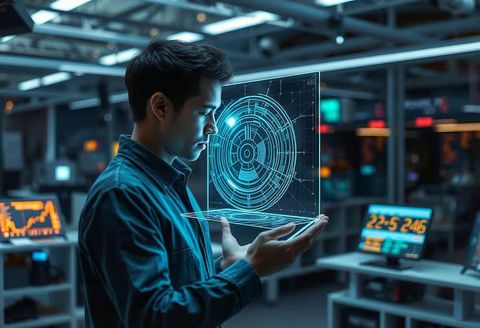
Digital twins are another area of development. A digital twin creates a digital representation of a physical machine, process, or facility. Depending on the system, it can be used to simulate changes, examine operating conditions, or support planning before physical modifications are made.
Mobile and Collaborative Robotics
Mobile robots are increasingly used for material movement within controlled industrial environments. Instead of remaining in one fixed location, these systems can navigate defined routes or work areas.
Collaborative robotics is also developing alongside improved sensing and control technologies. Cobots are intended for applications where humans and robotic equipment may share a workspace, although suitable risk assessment, guarding, operating procedures, and training remain important.
The following table summarizes several common robotics and automation technologies:
| Technology | Common Function | Typical Environment |
|---|---|---|
| Industrial robot arm | Welding, assembly, handling | Manufacturing |
| Collaborative robot | Assembly, inspection, handling | Shared industrial work areas |
| Autonomous mobile robot | Material movement | Warehouses and factories |
| Machine vision | Inspection and identification | Production lines |
| PLC | Machine and process control | Industrial facilities |
| Digital twin | Simulation and monitoring | Manufacturing and engineering |
| Industrial IoT sensors | Data collection | Connected equipment |
Laws or Policies
In India, robotics and automation are influenced by workplace safety rules, machinery requirements, industrial standards, data practices, and government programs supporting digital manufacturing and advanced technology.
The Occupational Safety, Health and Working Conditions Code, 2020 provides a broad framework concerning occupational safety and working conditions, alongside other applicable Indian laws and rules. The practical requirements for a particular facility can depend on its industry, workforce, equipment, location, and regulatory status.
Industrial Safety
Robotic equipment can create risks involving moving parts, unexpected machine movement, electrical systems, stored energy, and interaction between workers and machinery. Industrial facilities therefore commonly use measures such as physical guarding, emergency stopping systems, access controls, warning systems, and documented operating procedures.
International standards such as ISO 10218 address safety requirements for industrial robots, while ISO/TS 15066 provides guidance related to collaborative robot applications. Their applicability depends on the equipment, industry, and regulatory framework involved.
Digital Manufacturing Programs
India has promoted digital manufacturing through initiatives associated with Industry 4.0, advanced manufacturing, electronics production, artificial intelligence, and industrial technology. Programs and institutions under the Ministry of Heavy Industries and other government bodies have supported awareness, research, testing, and adoption of modern manufacturing technologies.
The IndiaAI Mission, approved in 2024, is focused on developing India's artificial intelligence ecosystem. Although it is not a robotics-specific program, developments in AI can influence robotics, machine vision, industrial analytics, and automated decision-support systems.
Organizations introducing automation also need to consider cybersecurity and data protection where connected machines collect or exchange digital information. The Digital Personal Data Protection Act, 2023 is relevant to personal data, although many industrial automation systems primarily process machine and production data rather than personal information.
Tools and Resources
Several categories of tools help people understand, plan, operate, and study robotics and automation systems.
Planning and Design Tools
Computer-aided design software can be used to create mechanical layouts and equipment models. Simulation platforms can help engineers examine robot movement, production sequences, and workspace requirements before physical installation.
Programmable logic controller software is commonly used to create and manage industrial control sequences. Human-machine interface platforms allow operators to view machine conditions, alarms, production information, and process controls.
Learning Resources
Educational platforms, technical documentation, manufacturer manuals, industrial training materials, and engineering textbooks can help beginners understand robotics concepts. Government manufacturing portals and standards organizations can also provide information about industrial technology and regulatory frameworks.
Useful learning topics include:
- Basic robotics terminology
- Sensors and actuators
- Industrial control systems
- Machine vision
- Robot programming concepts
- Industrial networking
- Workplace safety
- Preventive maintenance
- Artificial intelligence in manufacturing
Measurement and Monitoring Tools
Factories may use sensors and monitoring software to collect information about temperature, vibration, pressure, energy consumption, machine cycles, and equipment conditions. Data dashboards can organize this information so production teams can identify changes or recurring patterns.
Simulation and monitoring tools should be selected according to the intended application. A small automated workstation has different technical requirements from a large connected manufacturing facility.
FAQs
What is robotics and automation?
Robotics involves programmable machines that perform physical tasks, while automation refers to systems that execute processes with limited human intervention. They are often combined in modern manufacturing environments.
How does robotics and automation support smart manufacturing?
Robotics and automation can connect physical production activities with sensors, software, and data systems. This can help manufacturers monitor processes, coordinate equipment, and respond to changing production conditions.
What are common robotics and automation applications?
Common applications include assembly, welding, packaging, material handling, inspection, palletizing, warehouse movement, and repetitive machine tending. The appropriate application depends on the process and operating environment.
Are collaborative robots safe around people?
Collaborative robots include features intended to support shared workspaces, but their use still requires proper risk assessment and safety controls. The robot, application, tooling, speed, surrounding equipment, and human interaction all affect the overall risk.
Is robotics part of Industry 4.0?
Yes. Robotics is one component of Industry 4.0, which also includes connected sensors, industrial networks, data analytics, artificial intelligence, cloud or edge computing, and digital production systems. Robotics becomes part of a broader Industry 4.0 environment when it is connected with other digital manufacturing technologies.
Conclusion
Robotics and automation combine programmable machines, sensors, control systems, software, and data to support a wide range of industrial processes. Current developments are emphasizing artificial intelligence, machine vision, connected manufacturing, mobile robotics, and collaborative systems. In India, workplace safety requirements, technical standards, and technology-focused government programs all contribute to the environment in which automation is developed and implemented. Understanding these fundamentals provides a useful foundation for following developments in smart manufacturing and industrial technology.