Industrial Cybersecurity Units Guide With OT Security and Smart Manufacturing Insights
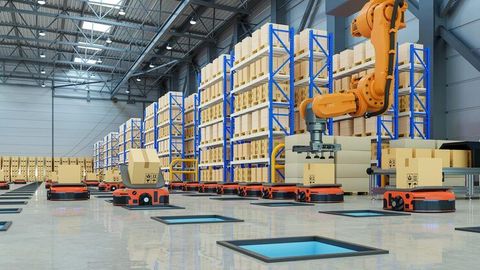
Industrial cybersecurity units are dedicated technologies, systems, and operational controls used to protect factories, production facilities, energy systems, warehouses, and other industrial environments from digital threats. They are closely connected with operational technology (OT), which includes the hardware and software responsible for monitoring and controlling physical processes.
Traditional information technology (IT) protects computers, applications, databases, and business networks. OT security focuses on equipment that interacts with the physical world, including programmable logic controllers, industrial control systems, sensors, robotic equipment, supervisory control and data acquisition systems, and production networks. Industrial cybersecurity units help connect these protection requirements with the realities of continuous industrial operations.
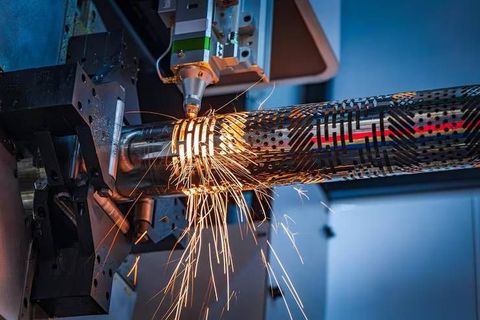
The growth of connected machinery has changed how industrial environments operate. Modern facilities increasingly use industrial Ethernet, wireless connections, cloud platforms, remote monitoring, machine learning, and industrial Internet of Things technologies. These technologies can improve visibility and automation, but they also create additional points that require security management.
Industrial cybersecurity units can include network security appliances, industrial firewalls, intrusion detection systems, secure gateways, endpoint protection systems, access-control mechanisms, monitoring platforms, and hardware designed for harsh industrial environments. Their purpose is generally to reduce unauthorized access, identify unusual activity, protect communications, and support reliable operation.
IT and OT Have Different Priorities
IT environments generally focus on information confidentiality, availability, and integrity. OT environments must also consider physical safety, process continuity, equipment behavior, and production stability.
An update that is routine for an office computer may require much more planning on an industrial controller. Some equipment operates continuously and may use specialized software or older communication protocols. Consequently, industrial cybersecurity units need to work within operational limitations rather than treating industrial equipment like ordinary computers.
Main Components
A typical industrial cybersecurity architecture may contain several layers:
- Network segmentation separates critical systems from less sensitive networks.
- Industrial firewalls control communication between defined network zones.
- Intrusion detection monitors traffic for unusual patterns.
- Secure gateways regulate communication between industrial equipment and external networks.
- Identity and access controls restrict system access to authorized users.
- Monitoring platforms provide visibility into devices, connections, and security events.
- Backup and recovery systems help restore important configurations after an incident.
These layers work together rather than functioning as a single protective mechanism.
Importance
Industrial cybersecurity matters because digital incidents can affect physical processes. A compromised industrial network may interfere with production controls, monitoring systems, equipment configurations, or communication between machines.
The consequences can extend beyond an organization's internal network. Manufacturing interruptions can affect supply chains, delivery schedules, inventory availability, and other connected operations. In environments involving water, energy, transportation, or other critical infrastructure, cybersecurity can also have wider public implications.
Who It Affects
Industrial cybersecurity units are relevant to several groups:
- Manufacturing operators managing connected production lines.
- Engineers responsible for industrial control systems.
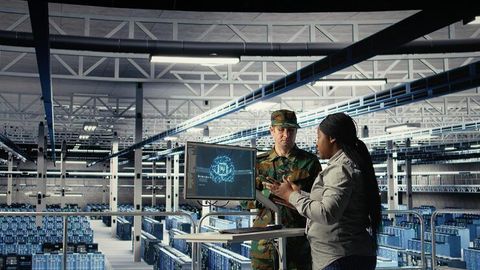
- Security teams monitoring enterprise and OT networks.
- Facility managers overseeing connected equipment.
- Equipment manufacturers developing network-enabled machinery.
- Organizations managing critical infrastructure.
- Workers who interact with industrial computers, controllers, and monitoring systems.
Cybersecurity also affects everyday users indirectly. A disruption in a manufacturing or distribution environment can influence the availability of products and components used across different industries.
Common Industrial Security Challenges
Industrial environments often contain equipment from different generations. New connected devices may operate alongside older controllers that were not originally designed for modern network threats.
Other challenges include limited visibility, shared accounts, remote connections, poorly documented network layouts, unsupported software, and inconsistent access controls. A security program therefore needs to account for both technological and operational conditions.
| Industrial Area | Security Focus | Typical Technology |
|---|---|---|
| Production network | Traffic control | Industrial firewall |
| Controllers | Unauthorized access | Access management |
| Machine communication | Visibility | Network monitoring |
| Remote connections | Secure access | Secure gateway |
| Industrial endpoints | Threat detection | Endpoint protection |
| Critical systems | Recovery | Backup platform |
| Connected sensors | Device management | Asset monitoring |
OT Security and Safety
OT security is closely related to operational safety, although cybersecurity and physical safety are separate disciplines. A security incident can sometimes influence equipment behavior, while a safety system may operate independently to reduce physical hazards.
For this reason, security planning commonly considers network architecture, authentication, system configuration, incident response, and physical operating procedures together.
Recent Updates
From 2024 through 2026, industrial cybersecurity has continued moving toward greater integration between IT security and OT security. Manufacturing organizations increasingly treat connected machinery, industrial networks, and remote-access pathways as part of a broader digital environment.
Greater Asset Visibility
A major trend is improved asset discovery. Organizations are placing greater emphasis on identifying controllers, sensors, gateways, engineering workstations, network devices, and other connected assets.
Asset visibility helps security teams understand which devices exist, how they communicate, and which systems require additional controls. This is particularly important in facilities where equipment has been added over many years.
Zero Trust Principles
Zero trust concepts are increasingly being adapted to industrial environments. Instead of assuming that a device or user is trustworthy because it is inside a particular network, access decisions can consider identity, device status, network location, and required permissions.
OT environments require careful implementation because excessive authentication or network changes can interfere with production processes. Industrial cybersecurity units therefore increasingly support controlled segmentation and policy-based access.
Artificial Intelligence and Automation
Artificial intelligence is being incorporated into cybersecurity monitoring to identify unusual network behavior and prioritize security events. In industrial environments, automated analysis can help identify patterns that may be difficult to review manually.
AI does not eliminate the need for human oversight. Industrial systems can produce unusual traffic during legitimate maintenance, configuration changes, or production transitions, so security alerts still require operational context.
Secure Remote Access
Remote connectivity has become an important security consideration. Maintenance, engineering, monitoring, and technical support activities can involve connections from outside a facility.
Modern approaches emphasize controlled access, strong authentication, limited permissions, session monitoring, and defined connection periods. The objective is to reduce unnecessary exposure while maintaining legitimate operational connectivity.
Laws or Policies
In India, industrial cybersecurity is influenced by national cybersecurity requirements, critical-information-infrastructure policies, incident-reporting expectations, and sector-specific controls. The Information Technology Act and associated rules provide part of the broader legal framework for electronic systems and cybersecurity.
The Indian Computer Emergency Response Team, commonly known as CERT-In, plays a central role in national cybersecurity coordination and incident-response guidance. Organizations operating relevant digital infrastructure may need to consider applicable directions concerning cybersecurity incidents, logging, reporting, and information security practices.
Critical information infrastructure receives additional attention through the National Critical Information Infrastructure Protection Centre. Organizations within designated critical sectors may face more specific protection and security-management requirements.
Industrial organizations should distinguish between general cybersecurity requirements and obligations that apply only to particular sectors or designated infrastructure. Requirements can vary according to the nature of the organization, the systems involved, and the applicable regulatory framework.
Policy Areas to Monitor
Important policy areas include:
- Cybersecurity incident reporting.
- Log retention and monitoring.
- Protection of critical information infrastructure.
- Access management.
- Data and network security.
- Third-party and remote-access controls.
- Incident response and recovery planning.
Because cybersecurity rules can change, organizations should rely on current official requirements applicable to their specific industry rather than assuming that one framework applies universally.
Tools and Resources
Several categories of tools can help organizations understand and manage industrial cybersecurity units and OT security.
Security Frameworks
The NIST Cybersecurity Framework provides a structured way to understand cybersecurity activities such as identifying risks, protecting systems, detecting events, responding to incidents, and recovering operations.
The IEC 62443 family is particularly relevant to industrial automation and control systems. It addresses security considerations across industrial environments, including system architecture, components, processes, and organizational responsibilities.
Monitoring and Assessment Tools
Industrial network monitoring platforms can map connected devices and observe communication patterns. Vulnerability assessment tools can help identify weaknesses, although testing should be carefully planned in operational environments because aggressive scanning can affect sensitive equipment.
Useful resource categories include:
- OT asset inventory platforms.
- Network traffic monitoring tools.
- Vulnerability management systems.
- Security information and event management platforms.
- Configuration management tools.
- Incident-response templates.
- Network segmentation diagrams.
- Risk assessment worksheets.
- Backup verification tools.
A practical assessment often begins with an inventory of devices, communication paths, user accounts, remote connections, and critical processes.
FAQs
What are industrial cybersecurity units?
Industrial cybersecurity units are technologies and controls designed to protect industrial networks, connected equipment, controllers, and operational systems. They can include firewalls, monitoring systems, secure gateways, access controls, and detection technologies.
Why is OT security important in smart manufacturing?
OT security helps protect the digital systems that control or monitor physical manufacturing processes. As smart manufacturing uses more connected machines, sensors, automation platforms, and remote connections, security becomes an important part of maintaining dependable operations.
How do industrial cybersecurity units protect factory networks?
They can restrict network communication, monitor traffic, identify unusual activity, control access, and separate sensitive industrial systems from other networks. Different technologies perform different functions, so protection generally uses multiple layers.
What standards are used for industrial cybersecurity?
Commonly referenced frameworks and standards include NIST cybersecurity guidance and the IEC 62443 series for industrial automation and control systems. Their applicability depends on the organization's environment and requirements.
How does artificial intelligence affect OT security?
AI can analyze large amounts of network and system information to identify unusual patterns and help prioritize security events. Human review remains important because legitimate industrial activities can sometimes resemble abnormal behavior.
Conclusion
Industrial cybersecurity units form part of a layered approach to protecting connected industrial environments. OT security has become increasingly important as smart manufacturing introduces more networked machinery, remote access, automation, and data-driven operations. Current security practices emphasize asset visibility, network segmentation, controlled access, monitoring, and structured incident response. Regulatory requirements and technical frameworks provide additional guidance for organizations operating industrial and critical systems.