From Ultrasonic to Capacitive: Learn How the Right Proximity Sensor Transforms Industrial Automation
In modern industrial automation, the ability to detect objects quickly, reliably, and without physical contact is essential. That’s where proximity sensors come in. Whether monitoring the movement of parts on a conveyor, controlling the level of liquid in a tank, or ensuring safety around robotic arms, these sensors play a critical role. Choosing the right type of proximity sensor—from ultrasonic to capacitive—can make a difference in performance, reliability, and maintenance. This article will explore how the different technologies work, what advantages and limitations they bring, current trends, how to select the best option, and how to maintain these systems for optimal use.
Why Proximity Sensors Matter: Benefits and Limitations
Benefits
Proximity sensors offer several key advantages over traditional contact-based sensors.
-
Non-contact detection: They sense the presence or absence of an object without touching it, thereby reducing wear and risk of damage. RS Components+1
-
Fast response: Since no mechanical movement is required, many proximity sensors provide rapid switching and high-speed detection. Omron
-
Durability in harsh environments: Many models resist dust, moisture, oil, and vibration better than mechanical switches. GEYA Electrical Equipment Supply+1
-
Versatility of target materials and environments: With different sensing principles, you can detect metal parts, plastics, liquids, powder, and more. RS Components+1
Limitations
No single proximity sensor type is perfect for every situation. Some common limitations include:
-
Sensitivity to target material: Some sensors (especially inductive) only detect metals. Others (capacitive, ultrasonic) detect many materials but may need calibration. GEYA Electrical Equipment Supply+1
-
Range and resolution trade-offs: Longer sensing ranges may reduce sensitivity or accuracy; shorter ranges may limit application scope. datasensing.com
-
Environmental influences: Factors such as temperature, humidity, vibration, or surrounding metallic objects can affect performance. Omron+1
-
Installation complexity: Some sensors require careful alignment, shielding, or mounting to avoid interference. RS Components
Understanding both benefits and limitations helps ensure you pick the right sensor for your application—and avoid costly mismatches.
Types or Categories of Proximity Sensors
Let’s walk through the primary types of proximity sensors used in industrial automation, highlighting how they work, typical uses, advantages, and drawbacks.
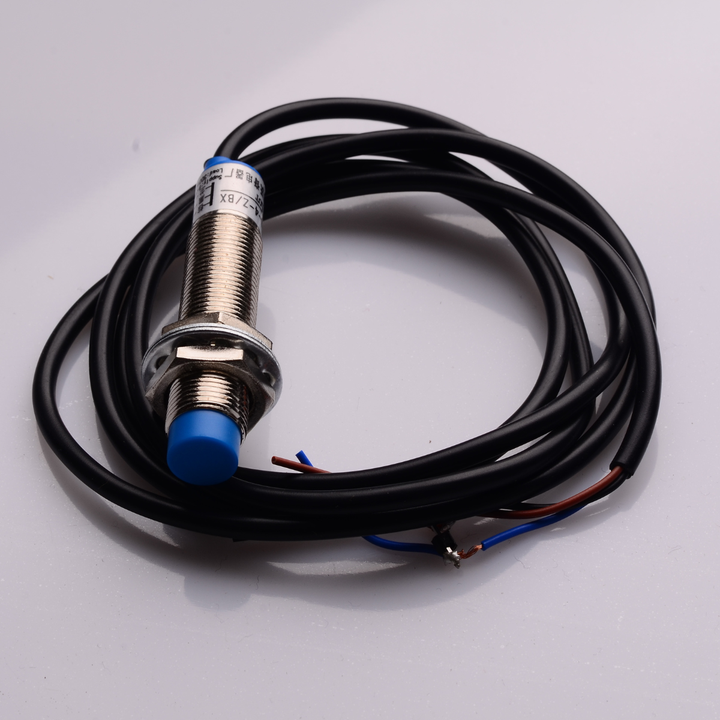
Inductive Proximity Sensors
-
How they work: They generate a high-frequency electromagnetic field via a coil. When a metallic object enters the field, eddy currents alter the impedance and trigger detection. GEYA Electrical Equipment Supply+1
-
Materials detected: Primarily metallic objects (iron, steel, aluminum, copper). Advance Electrical & Automation
-
Typical uses: Metal part detection on assembly lines, position sensing of metal components, machine tool applications. SkylerH Automation
-
Advantages: Very durable in dirty, oily, or harsh conditions; high repeatability. Advance Electrical & Automation
-
Limitations: Cannot detect non-metal targets; sensing range tends to be small (typically a few millimetres to a couple of centimetres). SkylerH Automation
Capacitive Proximity Sensors
-
How they work: They monitor changes in capacitance between the sensor's plate and the target object (or ground). When an object enters the sensing field and changes the dielectric between the plates, the sensor triggers. RS Components+1
-
Materials detected: Metals, plastics, liquids, powders, granular materials (virtually any material with differing dielectric constants). lorentzzi.com
-
Typical uses: Level detection (liquids or solids in tanks), packaging, detection of non-metal items in automation. GEYA Electrical Equipment Supply
-
Advantages: Versatile material detection; useful where non-metal objects or transparent containers are involved.
-
Limitations: More susceptible to environmental influences (humidity, temperature, nearby objects) and may require tuning. Machine Design
Ultrasonic Proximity Sensors
-
How they work: These sensors emit ultrasonic (high-frequency sound) waves and measure the echo time when the waves reflect off a target. Based on time-of-flight or amplitude changes, the object’s presence or distance is determined. GEYA Electrical Equipment Supply+1
-
Materials detected: Virtually any solid, liquid or granular target, as sound waves reflect off surfaces regardless of colour or transparency. datasensing.com
-
Typical uses: Level sensing for liquids or solids, obstacle detection, longer-range presence detection (e.g., robotics, picking systems). lorentzzi.com
-
Advantages: Good range; less affected by optical properties of target (colour, transparency).
-
Limitations: Accuracy can be reduced for soft or angled surfaces that absorb/diffuse sound; sensitive to temperature and air conditions. SkylerH Automation
Other Types (Photoelectric, Magnetic, Optical etc.)
While the focus is often on inductive, capacitive and ultrasonic, other proximity-related sensors include:
-
Magnetic / Hall-effect proximity sensors: Detect a magnetic field or magnet approaching. Useful in door-closures, magnet-mounted targets. dynamicrep.com
-
Photoelectric / optical proximity sensors: Use a light beam (infrared or visible) and detect the reflection or interruption of the beam. Good for object detection, packaging systems. SkylerH Automation
These types may overlap with “proximity” but often are treated separately in automation discussions.
Comparison Table
Here is a summary comparison to help sort through key differences:
| Type | Materials detected | Typical sensing range | Advantages | Limitations |
|---|---|---|---|---|
| Inductive | Metals | A few mm to some cm | Robust, unaffected by dust/oil | Only metals; short range |
| Capacitive | Metals + plastics + liquids + powders | Similar to inductive (varies) | Versatile materials | More sensitive to environment, needs tuning |
| Ultrasonic | Solids, liquids, various targets | Several cm up to metres | Good range, unaffected by colour/transparency | Soft or angled targets may distort echo; temp/air variations |
| Magnetic (Hall) | Magnets, ferromagnetic objects | Variable | Works through non-metal walls, long range possible | Requires magnet or ferrous target |
| Photoelectric | Various (via light reflection/block) | Up to many metres (depending) | Versatile, simple for many object detection | Affected by lighting, colour, reflectivity |
Latest Trends or Innovations
The world of industrial sensing is evolving, and proximity sensors are no exception. Some of the current trends include:
-
Growth of market and adoption: The global proximity and displacement sensors market was valued at about USD 6.82 billion in 2023 and projected to grow at a CAGR of ~9.1% from 2024 to 2030. Grand View Research
-
Smart and connected sensors: Sensors are no longer just “on/off”. They incorporate diagnostics, IO-Link connectivity, and real-time condition monitoring to align with Industry 4.0/5.0 goals.
-
Sensors for human-robot collaboration and safety: As more factories adopt cobots and flexible automation cells, proximity sensing for safety (detecting humans, machinery, collision) is becoming more critical. For example, research shows hybrid force- and proximity sensors tailored for robots. arXiv
-
Hybrid sensing technologies: Combining different sensing modalities (e.g., capacitive + ultrasonic, or proximity + force) for improved flexibility and coverage, especially for irregular shapes or materials.
-
Ultra-compact, high-precision sensors: For electronics manufacturing and smart factories, sensors with micro-form factors, very fast response times, and high repeatability are gaining traction.
-
Sustainability and harsh-environment sensing: Sensors built for extreme temperature, chemical exposure, or explosive atmospheres are becoming more reliable and cost-effective. Omron
Key Features to Consider
When selecting a proximity sensor for industrial automation, here are key features you should evaluate:
-
Target material and composition: Is the object metallic, plastic, liquid, powder? Inductive works for metal; capacitive for many materials.
-
Sensing distance (range) and resolution: How far away is the target? Do you need just presence/absence, or distance feedback?
-
Output type and interface: Digital (ON/OFF) vs analog (distance), NPN vs PNP, IO-Link, etc. Bedook®
-
Environmental conditions: Temperature range, presence of dust/oil, humidity, vibrations, chemicals. Check IP/IK ratings. RS Components
-
Mounting and installation constraints: Flush vs non-flush mounting, shielded or unshielded versions, required clearance from metal or other sensors. RS Components
-
Speed and response time: Especially important for high-speed production lines.
-
Repeatability and precision: For position sensing or robotic applications, precision can matter a lot.
-
Interference and immunity: Check susceptibility to electromagnetic interference, reflections, cross-sensor interference. Inductive and capacitive sensors can be affected by nearby metals or other sensors. Omron
-
Diagnostics and connectivity: Modern sensors may offer diagnostics (sensor health, contamination warning) and network connectivity (IO-Link, etc).
-
Cost of ownership and maintenance: Consider expected lifespan, ease of replacement, calibration requirements, spare parts.
Top Companies or Solutions
Here are some of the well-known players in the proximity sensor / industrial sensor field. While this is not exhaustive, these firms have strong reputations and comprehensive product lines.
-
Pepperl+Fuchs SE (Germany) – Long-standing supplier of industrial sensors including proximity sensors in harsh environments, explosion protection, etc. Wikipedia
-
ifm Group (Germany) – Specialises in automation components and sensors; notably behind many inductive proximity sensor innovations. Wikipedia
-
Omron Corporation (Japan) – Offers a broad range of proximity sensors (inductive, capacitive, ultrasonic) with global distribution. Omron
-
Balluff GmbH (Germany) – Known for industrial sensors, including proximity and position sensors, and for IO-Link enabled devices. LinkedIn
-
Schneider Electric SE (France) – While broader in scope, Schneider features proximity sensors as part of its automation portfolio. Grand View Research
When comparing solutions, consider each vendor’s support network (especially for India and Asia), spare-part availability, compatibility with your control systems, and whether the sensors match your specific environment.
How to Choose the Right Option
Here is a practical step-by-step approach to selecting the right proximity sensor for your industrial automation requirement:
-
Define the application scenario
-
What object or condition are you detecting? (metal part, plastic bottle, liquid level, etc.)
-
What is the distance or range required?
-
What is the speed of movement or cycle time?
-
What is the environment (temperature, dust, oil, chemicals, vibration)?
-
-
Match the sensing principle to the target
-
Metal target near sensor → consider inductive.
-
Non-metal, liquid, powder → capacitive may be suitable.
-
Longer range, target with varying surface properties → ultrasonic may fit.
-
Magnet-mounted target → magnetic (Hall) sensor.
-
Light interruption or reflection-based → photoelectric sensor.
-
-
Check compatibility with your system
-
Output type (digital/analog) matches your PLC or controllers.
-
Electrical supply, wiring type (AC or DC, 2-wire/3-wire).
-
Mounting options and space constraints in your machine.
-
Whether you need diagnostics, network connectivity (e.g., IO-Link).
-
-
Validate environmental suitability
-
Ensure sensor rating (IP, IK) is sufficient for dust, oil, moisture.
-
Confirm temperature range covers your ambient extremes.
-
Consider whether the sensor might be affected by nearby metals, other sensors, or process interference.
-
For ultrasonic, consider whether temperature/airflow could affect accuracy.
-
-
Evaluate lifecycle and maintenance
-
How easy is it to install, replace, or calibrate the sensor?
-
Does the vendor provide diagnostics or health alerts?
-
Consider total cost of ownership, including downtime risk, spare parts, and training.
-
-
Pilot and test if feasible
-
Whenever possible, run a sample in your real environment before full deployment.
-
Monitor actual performance, repeatability, false detections, interference issues.
-
Based on results, fine-tune mounting, alignment, or sensor type.
-
By following these steps, you can avoid common pitfalls (such as selecting a metal-only inductive sensor for a plastic target) and ensure the sensor delivers reliable performance.
Tips for Best Use or Maintenance
-
Mount sensors securely and ensure correct clearance and alignment as per manufacturer guidance.
-
Avoid putting the sensing face too close to large metal objects (unless shielded) unless the sensor is designed for that.
-
For capacitive sensors, be cautious of nearby objects or materials that may change the dielectric field and cause false triggers.
-
For ultrasonic sensors, ensure there is a proper “echo surface” (the target) and clear path for sound waves; avoid turbulent air flows or soft/angled targets that may scatter the sound.
-
Use shielded cables and proper grounding if installed in electrically noisy environments.
-
Schedule periodic checks: verify the sensor output is consistent, check for contamination (dust, oil) on sensing face, confirm mounting has not shifted due to vibration.
-
Maintain spare sensors (or at least critical parts) especially in high-availability operations.
-
Leverage sensor diagnostics if available (e.g., internal temperature monitoring, signal strength) to pre-empt failures.
-
Keep documentation of sensor models, settings, and wiring configuration—handy when replacements or recalibrations are needed.
FAQs: Real User Concerns
Q1: Can one sensor type detect everything?
No. While some sensors (like capacitive or ultrasonic) are more versatile, each sensing principle has trade-offs. For example, an inductive sensor cannot reliably detect plastic or liquid; choosing the “wrong” type can cause unreliable detection. GEYA Electrical Equipment Supply
Q2: How do I pick the right sensing distance?
Start by defining how far the object will be from the sensor under real conditions (including tolerance for variation). Then, select a sensor with a specified sensing range slightly beyond that—with some margin for installation and environmental factors.
Q3: What happens if the environment is harsh (dust, oil, vibration)?
Choose a sensor rated for industrial conditions (good IP/IK rating, robust housing). Inductive sensors are often favourable in very dirty or oily settings because they are relatively immune to contamination. RS Components
Q4: My sensor sometimes mis-detects or fails. What could cause that?
Potential causes: incorrect sensor type for material; improper mounting/clearance; interference from other metallic parts or sensors; environmental changes (temperature, humidity); dirt on sensor face (especially for optical/ultrasonic). Maintenance and correct installation mitigate these.
Q5: Should I choose a smart sensor with diagnostics or a standard one?
If your automation process demands high reliability, minimal downtime, or remote monitoring, a smart sensor may be worthwhile. It allows you to monitor sensor health, receive alerts, and integrate with condition-monitoring systems. If budget is tight and conditions are stable, a standard sensor may suffice.
Conclusion: Practical Takeaway
Choosing the right proximity sensor can transform your industrial automation from “just working” to “reliable, efficient and low-maintenance.” The key is understanding the target material and environment, matching to the sensor’s sensing principle (inductive, capacitive, ultrasonic, etc.), and paying attention to installation, system compatibility and maintenance. With the market for proximity sensors growing and technology advancing—such as smart sensors, hybrid sensing, and connectivity—there are more options than ever to tailor sensors to your specific automation challenge. Take the time to evaluate your needs, test candidate sensors in your real environment, and build a checklist around mounting, environment, output type and upkeep. The result: smoother operations, fewer surprises, and greater automation confidence.