Ecological Kelp Forest Diving Guide With Marine Biodiversity and Diving Resources
Kelp forests are underwater ecosystems formed by large brown algae that create dense habitats along temperate coastlines. An ecological kelp forest diving experience combines underwater exploration with an understanding of marine biodiversity, habitat protection, water conditions, and responsible diving practices.
These environments contain many layers of life, from microscopic organisms and small invertebrates to fish, seabirds, and marine mammals. A kelp forest diving guide helps general readers understand how these underwater forests develop, why they matter, and how diving activities can be planned around environmental conditions. The subject connects marine ecology, recreational diving, underwater photography, conservation, and ocean education. Understanding the structure of kelp forests also explains why changes in water temperature, nutrient availability, grazing populations, storms, and human activity can influence these ecosystems.
Context
What Are Kelp Forests?
Kelp forests are marine habitats dominated by large algae that attach to rocky or firm surfaces on the seafloor. Unlike terrestrial forests, kelp does not have roots, trunks, or leaves in the same biological sense as land plants. Instead, structures called holdfasts anchor kelp to the substrate, while flexible stems and broad blades extend upward through the water.
Kelp can grow rapidly under suitable environmental conditions. The upper portions may form a canopy near the surface, while lower areas contain smaller algae, sponges, sea stars, crabs, fish, and other organisms. This layered structure creates shelter and feeding areas for many species.
Origins of Ecological Kelp Forest Diving
Ecological kelp forest diving developed from the broader relationship between recreational diving and marine science. Divers can observe habitats that are difficult to study from shore, while researchers can use underwater observations to understand species distribution, habitat condition, and ecological changes.
A responsible approach treats the kelp forest as an ecosystem rather than simply a diving location. Divers need to understand buoyancy, fin movement, navigation, marine-life behavior, and the physical structure of kelp before entering dense areas.
Kelp Forest Habitat Structure
Kelp forests generally contain several ecological zones. The surface canopy receives strong light and can provide shelter for fish and other organisms. The middle water column contains kelp blades, drifting organisms, and swimming species, while the seafloor supports attached organisms and animals that live among rocks and sediment.
A simplified structure can be represented as follows:
| Kelp Forest Zone | Common Features | Ecological Function |
|---|---|---|
| Surface canopy | Kelp blades, small fish, seabirds nearby | Shelter and feeding areas |
| Midwater zone | Kelp stems, fish, drifting organisms | Movement and habitat |
| Lower forest | Smaller algae, invertebrates | Feeding and shelter |
| Seafloor | Rocks, sponges, crabs, sea stars | Attachment and habitat |
| Forest edge | Open water and kelp boundary | Species movement |
Importance
Marine Biodiversity
Kelp forests are associated with complex marine communities. Depending on location, divers may encounter fish, sea urchins, sea stars, anemones, mollusks, crustaceans, seals, sea lions, and numerous smaller organisms.
The exact species composition varies according to latitude, water temperature, depth, substrate, seasonal conditions, and regional ecology. Because kelp forests create physical structure in otherwise open water, they can increase the number of ecological niches available to marine organisms.
Why Kelp Forests Matter
Kelp ecosystems participate in marine food webs and provide physical habitat for numerous organisms. They also interact with coastal nutrient cycles and carbon processes. Their condition can influence species that depend on kelp directly as food or indirectly as shelter.
Changes in kelp abundance can therefore affect several connected parts of an ecosystem. Ecological kelp forest diving provides an opportunity to observe these relationships while learning how underwater habitats respond to environmental pressures.
Who Is Affected?
The condition of kelp forests matters to several groups, including recreational divers, marine researchers, coastal communities, conservation organizations, educators, photographers, and people whose livelihoods or activities depend on healthy coastal ecosystems.
Environmental changes may also affect underwater visibility, species encounters, navigation conditions, and the overall character of a diving area. Understanding these connections helps divers interpret what they see underwater instead of viewing individual organisms separately from their habitat.
Recent Updates
Changes in Kelp Ecosystems
Recent marine research has continued to examine how kelp forests respond to warming oceans, marine heatwaves, changes in predator populations, storms, disease, pollution, and variations in nutrient availability. Researchers increasingly combine underwater surveys with satellite observations, environmental sensors, photography, and long-term ecological monitoring.
Some regions have experienced substantial kelp decline, while other areas have shown recovery or expansion. These differences demonstrate that kelp ecosystems respond to multiple environmental factors rather than one universal cause.
Technology for Marine Observation
Modern diving resources increasingly include digital dive computers, underwater cameras, environmental sensors, mapping applications, and electronic navigation tools. These technologies can help divers record depth, water temperature, location, visibility, and observations of marine species.
Citizen science is another developing area. Divers may participate in structured observation programs where standardized information is collected and submitted for ecological research. Such programs can create large datasets covering locations and seasons that professional research teams cannot continuously monitor.
Responsible Diving Trends
Current ecological diving practices place greater emphasis on buoyancy control, maintaining distance from wildlife, avoiding physical contact with kelp structures, and reducing accidental damage to the seafloor. Underwater photography has also encouraged greater awareness of positioning and fin movement because a poorly controlled diver can disturb sediment or contact sensitive organisms.
Laws or Policies
Marine Protected Areas
Kelp forests may occur within marine protected areas, coastal reserves, conservation zones, or other regulated waters. Rules vary by jurisdiction and may control fishing, anchoring, collecting organisms, access to sensitive habitats, vessel movement, or other activities.
Divers should understand the regulations that apply to the specific location before entering a protected marine area. Restrictions can change according to habitat conditions, seasonal protections, wildlife activity, or conservation programs.
Diving and Environmental Rules
Local authorities may establish requirements related to diving operations, boats, access permits, marine wildlife interactions, or protected species. Some areas may also restrict the removal of shells, rocks, algae, or marine organisms.
Environmental regulations are generally intended to reduce physical disturbance and protect habitats or species with ecological significance. The exact requirements depend on the governing authority and the location of the kelp forest.
Wildlife Protection
Marine mammals, seabirds, turtles, fish, and invertebrates can be subject to different levels of protection. Divers should avoid chasing, feeding, touching, restraining, or intentionally disturbing wildlife.
Photography should also be conducted without blocking an animal's movement or forcing it into an unusual position. Wildlife behavior can change when animals are repeatedly approached, so observation should remain passive.
Tools and Resources
Dive Planning Tools
A dive computer can provide information such as depth, elapsed time, ascent rate, and other diving measurements. Divers may also use underwater compasses, surface navigation references, tide information, weather forecasts, and local water-condition reports.
Planning resources can help establish whether conditions are suitable for the intended experience. Important variables include water temperature, visibility, current, swell, depth, entry conditions, and available daylight.
Marine Identification Resources
Species identification guides can help divers recognize kelp, fish, invertebrates, and other organisms. Digital field guides, marine biology databases, underwater photography references, and regional species lists can provide additional information.
A useful observation record can include:
- Date and general location
- Approximate depth
- Water temperature
- Visibility conditions
- Kelp density
- Species observed
- Unusual environmental conditions
- Photographs when appropriate
Safety and Navigation Equipment
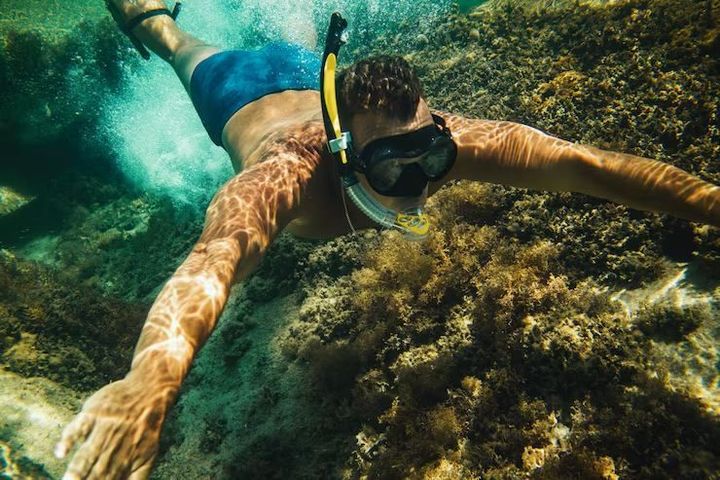
Common diving equipment includes a mask, fins, exposure protection, buoyancy equipment, breathing equipment, depth and time monitoring equipment, and appropriate surface signaling equipment. The specific equipment depends on the diving environment and the diver's training.
Navigation tools become particularly useful in dense kelp because surface visibility and underwater landmarks can change as divers move through the forest. Good buoyancy and controlled movement are important for reducing accidental contact with kelp and the seafloor.
FAQs
What is ecological kelp forest diving?
Ecological kelp forest diving combines recreational underwater exploration with learning about kelp ecosystems, marine biodiversity, habitat structure, and environmental conditions. It emphasizes observation and responsible interaction with the marine environment.
What marine biodiversity can be seen in kelp forests?
Kelp forests can contain fish, sea stars, sea urchins, crabs, anemones, mollusks, sponges, marine mammals, and many smaller organisms. Species vary according to geographic location and environmental conditions.
What equipment is useful for kelp forest diving?
A dive computer, compass, suitable exposure protection, buoyancy equipment, underwater light when appropriate, and surface signaling equipment can be useful. Equipment requirements vary according to depth, temperature, visibility, current, and local diving conditions.
Can divers touch kelp forests?
Physical contact should generally be minimized. Kelp and associated organisms can be damaged by fins, equipment, anchors, or uncontrolled movement, particularly in areas containing fragile organisms.
Are kelp forests protected by marine regulations?
Some kelp forests are located within marine protected areas or other regulated coastal zones. Rules can address access, fishing, anchoring, collecting organisms, wildlife interaction, and other activities, so requirements depend on the specific jurisdiction.
Conclusion
Kelp forests are structurally complex marine ecosystems that support diverse communities of organisms and provide important coastal habitat. Ecological kelp forest diving connects underwater recreation with marine biodiversity, environmental observation, and habitat awareness. Current research continues to examine how kelp ecosystems respond to changing ocean conditions, while diving technology is improving underwater observation and data collection. Regulations and responsible diving practices can help reduce physical disturbance within sensitive marine environments.