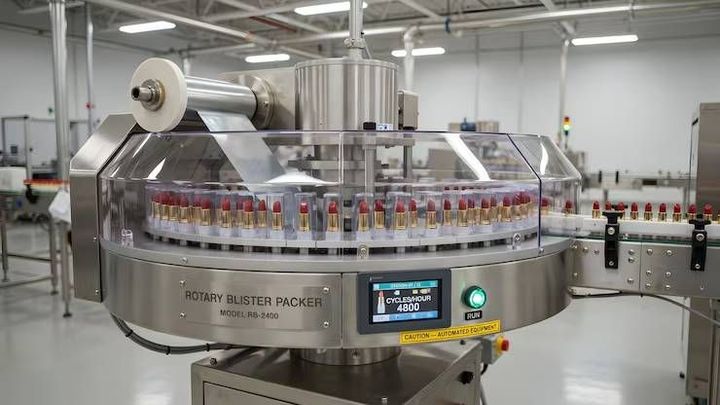
Blister Packaging Machines Guide With Modern Packaging Technology and Manufacturing Insights
Blister packaging machines are industrial systems designed to protect products inside formed cavities covered with a sealing material. They are widely used in pharmaceutical packaging, food production, consumer goods, electronics, and small-component manufacturing.
The packaging typically consists of a shaped plastic or other suitable material combined with a backing layer that protects the contents from dust, moisture, handling, and external contamination.
The development of blister packaging technology emerged from the need to organize individual products into compact, protected, and easily handled packages. As manufacturing processes became more automated, blister packaging machines evolved to support consistent packaging shapes, controlled sealing, accurate product placement, and higher production volumes.
What Is a Blister Packaging Machine?
A blister packaging machine forms cavities in a packaging material, places products inside them, and seals the cavities with a backing layer. Depending on the machine design, the process may involve heating, forming, cooling, filling, sealing, cutting, and inspection.
Common applications include:
Pharmaceutical tablets and capsules, where individual cavities help separate units.
Food items, such as confectionery and small portions, when suitable packaging materials are used.
Electronic components, which require organized storage and protection during transportation.
Small consumer products, including stationery, hardware components, and personal accessories.
Main Types of Blister Packaging Machines
Different machines are designed for different production environments. Selection depends on product dimensions, packaging material, production volume, sealing requirements, and the level of automation.
Machine type | Main function | Typical application |
|---|---|---|
Manual or tabletop system | Supports small-scale forming and sealing | Samples and limited production |
Semi-automatic machine | Combines operator handling with automated stages | Small and medium manufacturing operations |
Automatic blister packaging machine | Coordinates forming, filling, sealing, and cutting | Continuous production lines |
Rotary blister machine | Uses rotating stations for successive packaging operations | High-volume manufacturing |
Thermoforming machine | Uses heat to shape suitable plastic materials | Consumer goods and component packaging |
Cold-forming machine | Shapes suitable barrier materials without conventional heat forming | Packaging requiring enhanced barrier protection |
The appropriate design depends on the product and its packaging requirements. Not every machine can process every material, cavity shape, or product size.
Importance
Blister packaging machines play an important role in modern manufacturing because they help protect products, organize individual units, and maintain repeatable packaging quality. Their applications extend beyond factories because packaged products move through warehouses, distribution networks, retail environments, and household storage.
Product Protection and Handling
Packaging protects products from environmental exposure and physical contact during handling. Depending on the materials and sealing process, blister packs can help limit exposure to moisture, air, dust, and other external factors.
Individual cavities also reduce direct contact between packaged units. This arrangement can improve organization and make it easier to identify missing, damaged, or incorrectly positioned products during inspection.
Production Efficiency and Consistency
Automated blister packaging systems coordinate several manufacturing steps within one production sequence. These steps can include material feeding, cavity formation, product loading, sealing, trimming, and finished-pack inspection.
Automation can reduce repetitive manual handling and improve consistency when equipment is properly configured. However, actual production output depends on product dimensions, machine settings, material properties, changeover requirements, and the frequency of interruptions.
Industries That Use Blister Packaging
Several industries rely on blister packaging technology for different reasons.
Pharmaceutical manufacturing uses individual compartments and controlled packaging processes to support product protection and identification.
Food manufacturing uses suitable blister formats for selected products that require separation and organized presentation.
Electronics manufacturing uses formed packaging to hold small components in defined positions.
Consumer goods manufacturing uses blister packs to contain small items and keep their packaging organized during distribution.
Common Manufacturing Challenges
Despite its advantages, blister packaging involves several operational challenges. Incorrect temperature settings, uneven sealing pressure, unsuitable materials, and inconsistent product placement can result in defective packages.
Other challenges include material waste, equipment downtime, cleaning requirements, and the need to change machine settings when switching products. Effective process monitoring helps manufacturers identify these problems and maintain consistent packaging quality.
Recent Updates
Modern blister packaging technology continues to develop through automation, digital monitoring, material innovation, and improved inspection systems. Recent industry trends across 2024–2026 emphasize production traceability, resource efficiency, and packaging designs that balance protection with material requirements.
Automation and Digital Monitoring
Modern packaging lines increasingly incorporate programmable logic controllers, touchscreen interfaces, sensors, and production monitoring systems. These technologies allow operators to adjust machine parameters, observe operating conditions, and identify process interruptions.
Some systems can record production information, monitor temperature and pressure, and connect with factory management platforms. The capabilities vary by equipment configuration, and digital monitoring does not eliminate the need for routine inspection.
Machine Vision and Quality Inspection
Machine vision systems use cameras and image-processing software to inspect packaging during production. Depending on the configuration, they can identify missing products, damaged cavities, incorrect positioning, printing defects, or sealing irregularities that are visible to the inspection system.
Automated inspection can help reduce dependence on manual checking alone. Nevertheless, the accuracy of inspection depends on lighting, camera placement, product characteristics, and system calibration.
Material Innovation and Packaging Design
Manufacturers are examining recyclable materials, reduced-material packaging designs, and alternative barrier structures. These developments reflect growing attention to packaging waste and environmental performance.
Material changes require careful evaluation because blister packaging must still protect the product and maintain reliable sealing. A material that is suitable for one product may not provide sufficient barrier protection or forming performance for another.
Energy and Resource Management
Modern equipment may incorporate improved heating controls, more efficient drives, and monitoring functions that help operators understand energy use. Better control of forming and sealing processes can also reduce rejected packages and unnecessary material consumption.
The environmental impact of a blister pack depends on several factors, including its material composition, manufacturing process, product protection requirements, and available waste-management infrastructure.
Laws or Policies
Blister packaging manufacturers must consider applicable rules covering product safety, packaging materials, labeling, machinery operation, workplace safety, and environmental management. Requirements differ by industry and country, so the relevant rules depend on the product being packaged and where it will be distributed.
Packaging Rules in India
In India, manufacturers may need to consider several regulatory frameworks depending on the application.
The Central Drugs Standard Control Organisation (CDSCO) oversees relevant pharmaceutical regulatory requirements, while applicable drug rules address aspects of packaging and labeling. Requirements depend on the product category and current legal provisions.
The Legal Metrology framework can apply to packaged commodities, including declarations required for certain products. Environmental requirements may also apply to plastic packaging, waste handling, and producer responsibilities under relevant rules.
Manufacturers should distinguish between general packaging requirements and rules specific to medicines, food, electronics, or other regulated products.
Food and Pharmaceutical Packaging
Food packaging operations must consider applicable food-safety requirements, including relevant provisions administered by the Food Safety and Standards Authority of India (FSSAI). Materials intended for contact with food should be appropriate for their intended use and comply with applicable requirements.
Pharmaceutical packaging requires particular attention to product compatibility, labeling, contamination control, and package integrity. Manufacturers may also need documented quality procedures and traceability systems according to the applicable regulatory framework.
Machinery and Workplace Safety
Blister packaging equipment includes moving parts, heating elements, cutting mechanisms, and electrical systems. Appropriate safeguards may include emergency stops, protective guards, electrical protection, operator training, and preventive maintenance.
Manufacturers should assess the machinery and workplace safety requirements applicable to their facility. International standards and technical guidance may help inform machine design and risk assessment, but their legal applicability depends on the jurisdiction and circumstances.
Tools and Resources
Selecting and operating blister packaging machines involves evaluating equipment capabilities, packaging materials, production requirements, and quality-control methods. Several practical tools can help organize this information.
Equipment Selection Checklist
Before evaluating a machine, manufacturers can document the following factors:
Product dimensions, shape, weight, and handling characteristics.
Required cavity size, depth, and package configuration.
Compatible forming and backing materials.
Expected production volume and changeover frequency.
Available factory space, electrical supply, and compressed air requirements.
Cleaning procedures, maintenance access, and operator safety features.
Inspection, batch identification, and traceability requirements.
A written checklist makes it easier to compare equipment specifications against actual production needs.
Production Capacity Calculator
A production capacity calculator helps estimate theoretical output from machine speed and the number of packages produced per cycle.
For example, if a machine produces 30 blister packs per minute, its theoretical output over a 60-minute period is:
30 × 60 = 1,800 blister packs.
Actual output may be lower because of setup time, material changes, quality checks, stoppages, and rejected packages. Capacity calculations should therefore distinguish between theoretical production and actual usable output.
Quality-Control Records
Manufacturers can use digital spreadsheets or production management systems to record important process information. Useful fields include batch identification, material type, forming temperature, sealing conditions, inspection results, downtime, and rejected-pack quantities.
These records help identify recurring defects and evaluate whether process adjustments improve consistency. Measurement procedures should be appropriate for the product and packaging design.
Technical Documentation and Industry Resources
Machine manuals, material specifications, maintenance schedules, and packaging validation documents provide important operational information. Relevant regulatory publications can clarify applicable requirements for product labeling, material safety, and manufacturing practices.
Equipment documentation should identify supported materials, operating limits, cleaning methods, and recommended inspection procedures. Technical decisions should be based on the actual machine configuration rather than assumptions about all blister packaging systems.
FAQs
What is a blister packaging machine used for?
A blister packaging machine forms cavities, places products inside them, and seals them with a backing material. It is used in pharmaceutical, food, electronics, and consumer goods manufacturing, depending on machine design and material suitability.
How does an automatic blister packaging machine work?
An automatic blister packaging machine typically feeds the packaging material, forms cavities, loads products, seals the backing layer, and cuts the finished packs. Sensors and inspection systems may monitor selected production stages.
What is the difference between thermoforming and cold-forming blister packaging?
Thermoforming uses heat to shape a suitable plastic material into cavities. Cold-forming uses pressure to shape suitable barrier materials without conventional heat forming. The choice depends on the required barrier properties, product characteristics, and packaging design.
Which materials are used in blister packaging machines?
Common materials include suitable thermoformable plastics, aluminum-based barrier materials, paperboard, and compatible sealing layers. The exact combination depends on the product, required protection, forming method, and applicable regulations.
How can manufacturers improve blister packaging quality?
Manufacturers can improve consistency through suitable material selection, controlled forming and sealing conditions, preventive maintenance, operator training, and regular inspection. Monitoring rejected packages and recording production data can also help identify recurring process problems.
Conclusion
Blister packaging machines support modern manufacturing by forming, filling, sealing, and inspecting individual product packages. Their applications range from pharmaceuticals and food products to electronics and small consumer components. Automation, machine vision, digital monitoring, and material development continue to influence packaging operations. Appropriate equipment selection, process control, regulatory awareness, and quality inspection remain important for maintaining reliable packaging performance.