Scuba Diving With Sharks Guide With Marine Life Insights and Safety Tips
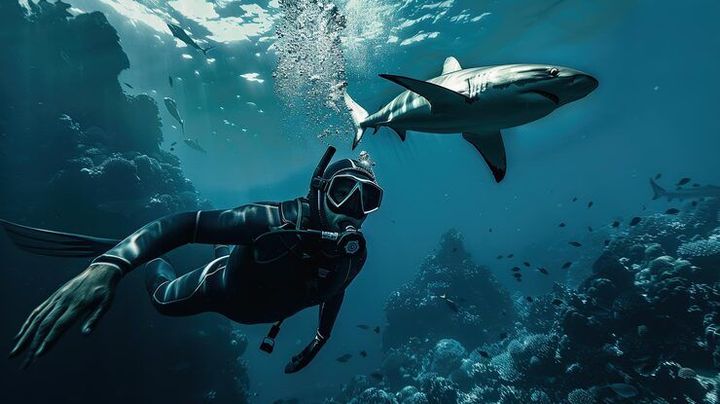
Scuba diving with sharks is a form of marine wildlife observation in which divers enter the underwater environment where sharks naturally live. Depending on the destination and species, dives may take place around coral reefs, rocky coastlines, open-ocean areas, islands, channels, or deeper offshore habitats.
The experience combines scuba diving skills with an opportunity to observe marine life in its natural surroundings.
Sharks are a diverse group of marine animals with different body sizes, behaviors, feeding patterns, and habitats. Species commonly encountered by divers can include reef sharks, nurse sharks, whale sharks, hammerhead sharks, tiger sharks, bull sharks, and oceanic whitetip sharks. Their behavior varies significantly, so identifying the species and understanding the local environment are important parts of responsible diving.
Shark diving developed from the wider practice of underwater wildlife observation. Early recreational divers often encountered sharks incidentally, while organized marine-life excursions gradually created opportunities for divers to visit areas known for shark populations. Modern programs may combine guided scuba diving, marine education, species identification, conservation information, and underwater photography.
A shark dive is not simply a matter of entering the water near an animal. Divers need suitable certification or training, appropriate equipment, knowledge of local conditions, and an understanding of how to behave around wildlife. Dive planning can also involve depth, currents, visibility, weather, entry and exit procedures, emergency arrangements, and communication between divers.
Understanding Shark Behavior
Sharks are generally adapted to specific ecological roles rather than behaving in a uniform way. Some species spend much of their time near reefs, while others travel through open water or move between coastal and offshore environments.
Divers may observe sharks swimming continuously, resting near the seabed, circling an area, or moving through a current. A shark's behavior can change because of environmental conditions, food availability, other animals, human activity, or changes in the surrounding habitat.
It is important not to interpret every movement as aggression. At the same time, divers should not assume that an animal is harmless. Wildlife encounters are unpredictable, and responsible diving emphasizes observation rather than attempting to control or approach animals closely.
Common Shark-Diving Environments
Shark encounters can occur in several underwater environments:
Coral reefs where reef-associated species may be present
Sandy seabeds used by some bottom-dwelling species
Offshore waters where pelagic sharks may travel
Cleaning stations where marine animals gather
Channels and passages influenced by currents
Coastal areas where seasonal marine activity changes
Deep-water habitats reached by experienced divers
The physical environment affects visibility, current strength, depth, temperature, and available marine life. These conditions influence how a dive is planned and what equipment may be appropriate.
Importance
Scuba diving with sharks matters because it connects recreational diving with marine education and wildlife awareness. Divers can observe predator-prey relationships, reef communities, schooling fish, rays, turtles, and other marine organisms while learning how different species interact with their surroundings.
Sharks also play important ecological roles in many marine ecosystems. As predators, they can influence food webs and the distribution and behavior of other marine animals. Their presence can therefore provide information about broader marine ecosystem conditions.
Who Participates in Shark Diving?
Shark diving can involve recreational divers, underwater photographers, marine researchers, conservation groups, instructors, and travelers interested in marine wildlife. Experience requirements vary according to the environment and dive profile.
A calm shallow-water encounter can have very different requirements from a deep offshore dive involving strong currents. Divers should therefore consider their training, experience, physical readiness, equipment, and familiarity with the specific environment.
Marine Life Beyond Sharks
A shark dive rarely involves sharks alone. Divers may encounter many other organisms during the same underwater trip, including:
Reef fish
Rays
Sea turtles
Dolphins in suitable environments
Moray eels
Octopuses
Crustaceans
Coral communities
Sea plants and algae
Planktonic organisms
This broader perspective helps explain why sharks should be viewed as part of an ecosystem rather than as isolated attractions.
Safety and Diver Awareness
Safety during scuba diving with sharks depends on preparation and situational awareness. Divers should understand the dive plan, depth limits, current conditions, entry and exit procedures, communication signals, and emergency arrangements before entering the water.
General principles include:
Maintain controlled buoyancy and avoid unnecessary movements.
Stay with the planned dive group or designated buddy.
Follow the instructions of qualified dive personnel.
Avoid touching, chasing, feeding, or attempting to ride marine animals.
Keep appropriate awareness of surroundings and other divers.
Monitor air supply, depth, time, and decompression requirements.
Respond calmly to changing environmental conditions.
Follow local wildlife rules and protected-area requirements.
These principles apply to scuba diving generally, but wildlife encounters require additional attention because animals can move unexpectedly.
Recent Updates
From 2024 through 2026, shark diving has continued to develop alongside broader interest in marine conservation, responsible wildlife tourism, underwater photography, and digital dive planning. Technology has also made it easier for divers to record observations and monitor their own dive information.
Marine Conservation Awareness
Shark-focused diving increasingly emphasizes observation and conservation rather than direct interaction. Educational programs may explain species identification, habitat protection, fishing pressures, migration patterns, and the ecological role of sharks.
Some marine areas use protected zones, seasonal restrictions, or wildlife-management measures to reduce human pressure on sensitive habitats. The rules vary significantly between destinations and species.
Underwater Photography
Compact cameras, action cameras, dive computers, and underwater lighting equipment have expanded access to marine photography. Divers can document species and environmental conditions without physically interacting with animals.
Photography requires additional awareness because concentrating on a camera can reduce attention to depth, air supply, current movement, or nearby divers. Wildlife photographers therefore need to balance image-making with normal dive responsibilities.
Digital Dive Monitoring
Modern dive computers can display information such as depth, dive time, ascent rate, water temperature, and decompression-related calculations. Some devices can also record dive profiles for later review.
Navigation tools, digital maps, marine-weather applications, and electronic logbooks can provide additional information during trip planning. These technologies support preparation but do not replace training or judgment in changing underwater conditions.
Sustainable Wildlife Tourism
Marine tourism programs increasingly discuss responsible interaction with wildlife. Practices can include limiting physical contact, avoiding unnecessary disturbance, respecting protected species, managing diver numbers, and following local environmental rules.
The approach varies between locations. Some destinations have specific shark-diving protocols, while others rely on broader marine-park regulations and wildlife-protection measures.
Laws or Policies
Scuba diving with sharks is affected by several categories of rules, including marine conservation laws, protected-area regulations, fisheries legislation, tourism requirements, boating rules, and scuba-diving standards. Because the target jurisdiction can differ by destination, there is no single worldwide rule governing shark encounters.
Marine Protected Areas
Some shark habitats are located within marine protected areas. Such areas may restrict fishing, anchoring, wildlife interaction, collecting marine organisms, or access to particular zones.
Divers may also need to follow rules relating to dive boats, buoyancy control, waste disposal, photography, and interaction with protected species. Regulations should be checked for the specific marine area before diving.
Wildlife Protection
Many shark species are subject to national or international conservation measures. Protection can involve restrictions on catching, possessing, transporting, trading, or disturbing particular species.
Rules can also apply to other marine animals encountered during dives. Divers should avoid collecting shells, coral, animals, or other natural materials from protected environments.
Diving and Boat Safety
Scuba operations can be influenced by requirements covering diver qualifications, equipment, boat operations, emergency planning, medical readiness, and environmental conditions. Commercial diving activities may be regulated differently from recreational diving.
Local authorities can also establish requirements for dive operators, vessels, protected areas, or specific marine activities. These rules can change according to environmental conditions and conservation priorities.
Tools and Resources
Planning a shark dive involves several types of information. Dive certification records can help divers confirm their training level, while dive logs provide a record of previous depth, duration, conditions, and experience.
Weather and marine-condition applications can provide information about wind, waves, tides, currents, visibility, and water temperature. These factors can change the character of a dive considerably.
Useful resources include:
Dive computers
Underwater navigation equipment
Marine weather applications
Tide and current information
Digital dive logs
Species identification guides
Marine protected-area maps
Emergency planning checklists
Equipment inspection checklists
Underwater communication devices
Dive-planning tables
Marine conservation information
A simplified comparison of common shark-diving environments is shown below:
| Diving Environment | Possible Shark Encounters | Main Considerations |
|---|---|---|
| Coral Reef | Reef sharks | Buoyancy and reef protection |
| Sandy Bottom | Nurse or other bottom-associated species | Depth and visibility |
| Open Ocean | Pelagic species | Currents and experience |
| Coastal Zone | Several possible species | Weather and local regulations |
| Channel | Reef or migratory species | Current strength |
| Deep Water | Species vary by location | Depth and decompression planning |
Equipment selection should correspond to the dive environment rather than the presence of sharks alone. Exposure protection, buoyancy equipment, breathing systems, lighting, navigation equipment, and signaling devices may vary according to water temperature, depth, visibility, and local conditions.
FAQs
Is scuba diving with sharks safe?
Shark diving involves inherent risks associated with scuba diving and wildlife encounters. Safety depends on appropriate training, equipment, environmental assessment, adherence to dive procedures, and respectful behavior around marine animals. No wildlife encounter can be treated as completely predictable.
What should I know before scuba diving with sharks?
Divers should understand the species and local environment, review the dive plan, check weather and water conditions, maintain appropriate buoyancy, monitor depth and air supply, and follow the instructions of qualified dive personnel.
What sharks can be seen while scuba diving?
Possible sightings depend on location and season. Divers may encounter reef sharks, nurse sharks, whale sharks, hammerheads, tiger sharks, bull sharks, or other species. Not every dive site has the same shark population.
What should you avoid when diving with sharks?
Divers should avoid touching, chasing, feeding, cornering, or deliberately obstructing sharks. They should also avoid sudden unnecessary movements and should maintain awareness of their buddy, dive group, equipment, depth, and surroundings.
What equipment is needed for shark diving?
The required equipment depends on the dive environment and diver training. Standard scuba equipment can include a mask, fins, exposure protection, buoyancy equipment, regulator, breathing cylinder, dive computer, and appropriate signaling equipment. Additional equipment may be appropriate for specific conditions.
Conclusion
Scuba diving with sharks combines underwater recreation with opportunities to observe marine wildlife in its natural environment. Understanding shark behavior, local ecosystems, diving conditions, and responsible wildlife practices is an important part of the experience. Recent developments include greater use of digital dive monitoring, underwater photography, conservation education, and responsible wildlife-management practices. Applicable rules vary by destination and can include marine-protection, wildlife, diving, boating, and protected-area requirements.