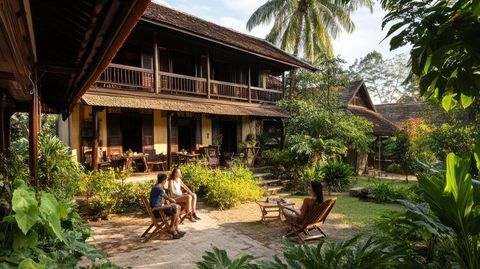
Heritage Palace Hotels Guide With Royal Traditions, Heritage Attractions, and Stay Information
Heritage palace hotels are accommodations created within historic palaces, forts, mansions, castles, havelis, and other architecturally significant residences. In India, the concept developed from efforts to preserve historic buildings by adapting them for contemporary hospitality while retaining their architectural character.
The idea connects accommodation with regional history, traditional design, cultural practices, and local heritage.
Many heritage palace hotels are located in areas associated with former royal families, historic trading communities, regional rulers, or important cultural traditions. Their buildings may contain courtyards, carved stonework, decorative ceilings, old paintings, gardens, balconies, ceremonial halls, and traditional furnishings.
The experience differs from staying in a modern hotel because the building itself can form an important part of the visit. Rooms may be located in sections that were originally used as private residences, guest quarters, administrative areas, or ceremonial spaces.
How Palace Properties Become Hotels
Converting a historic property into accommodation requires balancing preservation with modern requirements. Structural changes, electrical systems, plumbing, accessibility, fire protection, sanitation, and guest facilities may need to be introduced without removing important architectural elements.
Indian tourism guidelines have historically recognized heritage hotels in palaces, forts, castles, havelis, hunting lodges, and residences constructed before 1950. The national hospitality database continues to recognize Heritage accommodation categories, including Heritage Basic, Heritage Classic, and Heritage Grand classifications.
Common Heritage Features
Heritage palace hotels can contain several elements that help visitors understand the history of a property:
Traditional courtyards and gardens
Decorative arches, columns, and balconies
Historic furniture and artwork
Regional architectural materials
Former royal or ceremonial rooms
Local textiles and decorative objects
Landscaped grounds and historic water features
Access to nearby monuments and cultural attractions
These features vary considerably from one property to another, so the term heritage palace hotel does not describe one fixed architectural style.
Importance
Why Heritage Palace Hotels Matter
Heritage palace hotels have significance beyond accommodation because they can connect tourism with architectural preservation. Historic buildings require continuous maintenance, and adapting them for contemporary use can provide a practical reason to retain their structures rather than replacing them with entirely new buildings.
They also help introduce visitors to regional history. A palace may reflect the political, artistic, agricultural, architectural, or trading traditions of the area in which it was constructed.
For travelers, heritage accommodation can provide a different form of cultural context. Instead of visiting a monument for a short period and then leaving, guests may spend several days within a historic environment and observe architectural details as part of their daily surroundings.
Who They Affect
The heritage hotel sector can involve several groups:
Travelers interested in history and architecture
Families planning cultural holidays
International visitors exploring regional traditions
Heritage conservation professionals
Local tourism businesses
Property owners managing historic buildings
Communities located near heritage attractions
Researchers and students studying architecture and culture
The sector can also create challenges. Historic buildings may have narrow corridors, uneven floors, older staircases, limited elevator access, or room layouts that cannot easily be modified. Visitors therefore need clear stay information before selecting accommodation.
Comparing Heritage and Modern Accommodation
| Feature | Heritage Palace Hotels | Modern Hotels |
|---|---|---|
| Building character | Historic architectural elements | Contemporary architectural design |
| Room layout | Often influenced by the original building | Usually designed around current room standards |
| Cultural setting | Closely connected with local history | May have limited historic context |
| Interior design | Traditional or restored elements | Modern furnishings and finishes |
| Accessibility | Can vary because of historic structures | Usually easier to design for accessibility |
| Nearby attractions | Often located near historic areas | Can be located in commercial districts |
| Guest experience | Combines accommodation with heritage surroundings | Primarily focused on contemporary accommodation |
Recent Updates
Current Heritage Tourism Trends
From 2024 through 2026, heritage tourism has continued to develop around cultural preservation, experiential travel, and the adaptive reuse of historic properties. Travelers increasingly look for accommodation that provides a connection with architecture, local history, food traditions, crafts, and cultural attractions.
Another noticeable trend is the use of digital information. Historic properties can now provide digital room information, virtual property tours, electronic maps, online reservation systems, and detailed descriptions of architectural features. These tools help travelers understand a property before arrival.
Sustainability is also becoming more relevant. Reusing an existing historic structure can reduce the need for completely new construction, although older buildings may require careful approaches to energy efficiency, water management, waste handling, and climate control.
Preservation and Contemporary Comfort
Heritage palace hotels increasingly need to balance preservation with present-day expectations. Travelers may expect reliable connectivity, climate control, modern bathrooms, comfortable bedding, accessibility information, and clear communication while still wanting the historic character of the property to remain visible.
This balance can be difficult because extensive modernization may affect original walls, flooring, windows, ceilings, or decorative features. Sensitive adaptation therefore remains an important part of heritage accommodation planning.
Growing Digital Research
Online maps, accommodation databases, travel platforms, digital archives, and review systems have made it easier to research palace hotels before a trip. Travelers can compare location, room categories, accessibility, heritage features, nearby attractions, transportation options, and property policies.
The increasing availability of information also makes it easier to distinguish between an actual historic property and a newer accommodation designed in a traditional architectural style.
Laws or Policies
Heritage Hotel Classification in India
In India, heritage accommodation is influenced by tourism classification frameworks administered through the Ministry of Tourism. The national hospitality database, known as NIDHI+, includes heritage accommodation categories and provides information about classified properties.
Heritage hotel guidelines have traditionally covered hotels operating in palaces, forts, castles, havelis, hunting lodges, and residences constructed before 1950. Architectural character and the relationship between historic and newly adapted areas are important considerations.
Building and Safety Requirements
Heritage status does not remove the need to follow applicable building, fire safety, sanitation, environmental, accessibility, and local authority requirements. Depending on the property and location, additional permissions may apply when structural changes are proposed.
Historic buildings can present particular safety challenges because their original design was not created according to modern building practices. Electrical upgrades, emergency exits, fire detection systems, structural maintenance, and visitor access therefore require careful planning.
State and Local Rules
Tourism and accommodation requirements can also vary between states and local authorities. A palace property may need to comply with local building permissions, heritage conservation requirements, fire regulations, environmental provisions, and accommodation-related rules in addition to national tourism classification frameworks.
Travelers should therefore understand that a heritage classification primarily describes the character and classification of the accommodation. It does not mean that every historic feature is publicly accessible or that every property has identical facilities.
Tools and Resources
Tourism Databases
NIDHI+ is a useful resource for researching accommodation units recognized within India's tourism framework. Its database can help users identify properties by accommodation category and location.
Maps and Travel Platforms
Digital mapping platforms can help travelers examine the surroundings of a palace hotel. Important information can include distance from airports or railway stations, proximity to heritage attractions, road access, nearby museums, historic districts, and public transportation.
Travel platforms can also provide room descriptions, property policies, guest feedback, photographs, and availability information. These details are particularly useful when a historic building has unusual room layouts or limited accessibility.
Heritage Research Resources
Museum websites, digital archives, tourism publications, architectural records, and local cultural institutions can provide background information about historic properties and nearby attractions. Travelers interested in the history of a palace can use these resources to understand the building before visiting.
Stay Information Checklist
Before selecting a heritage palace hotel, useful information to review includes:
Original construction period
Heritage classification, if applicable
Room location within the historic building
Accessibility and staircase information
Bathroom configuration
Climate-control arrangements
Transportation access
Nearby heritage attractions
Property policies
Check-in and check-out arrangements
Dining arrangements and available facilities
Photography rules
Information about restoration or renovation
FAQs
What are heritage palace hotels?
Heritage palace hotels are accommodation properties located in historic palaces or other buildings with architectural and cultural significance. They preserve elements of the original structure while adapting the property for contemporary stays.
What should I check in heritage palace hotel stay information?
Check the room location, accessibility, bathroom arrangements, transportation access, property policies, available facilities, and proximity to heritage attractions. Historic buildings can have layouts that differ from modern hotels.
Are heritage palace hotels suitable for families?
Many can accommodate families, but room configurations differ. Families should examine occupancy rules, connecting-room availability, staircase access, child policies, and nearby transportation arrangements before making a reservation.
What heritage attractions are usually near palace hotels?
Depending on the destination, nearby attractions may include forts, museums, historic markets, temples, old city districts, gardens, monuments, craft centers, and cultural museums. The actual attractions vary by location.
Are all palace hotels officially classified as heritage hotels?
No. A property can be located in a palace-style or historic building without holding a formal heritage classification. Official classification and the property's own historical description should be considered separately.
Conclusion
Heritage palace hotels combine accommodation with historic architecture, regional traditions, and access to cultural attractions. Their importance comes partly from adapting historic buildings for continued use while retaining distinctive architectural features. Recent trends include digital research tools, experiential tourism, sustainability considerations, and careful modernization. In India, heritage accommodation operates within tourism classification frameworks alongside applicable building, safety, environmental, and local requirements.