Heat Pump Repair Explained With Common Problems, Solutions, and Maintenance Tips
Heat pump repair involves identifying and correcting problems that affect a heat pump's ability to heat or cool a building. Unlike systems that create heat through combustion, a heat pump transfers thermal energy between indoor and outdoor spaces.
During cooling operation, it moves heat from indoors to outdoors, while heating operation reverses the direction of heat transfer.
A typical heat pump contains a compressor, indoor and outdoor coils, a refrigerant circuit, fans, filters, electrical controls, sensors, and a reversing valve. These components work together to move heat through the system. When one component becomes dirty, damaged, incorrectly adjusted, or electrically defective, the system may produce unusual sounds, reduced airflow, inadequate heating or cooling, or repeated shutdowns.
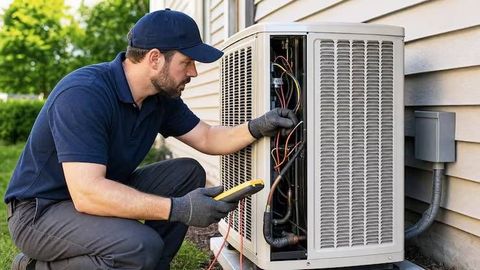
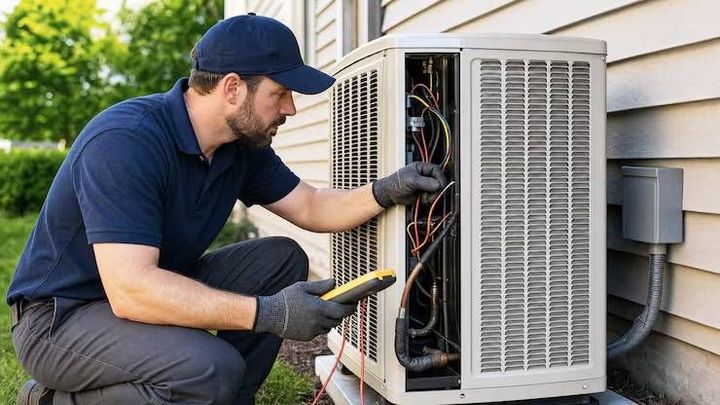
Heat pump repair can range from simple homeowner maintenance to technical work involving electrical components or refrigerant circuits. Cleaning an accessible filter is generally a routine household task, while refrigerant recovery, leak diagnosis, electrical testing, and component replacement require appropriate equipment and technical knowledge.
Heat pumps are available in several configurations, including air-source, ground-source, ductless mini-split, and packaged systems. Although their designs differ, many basic troubleshooting principles apply across these categories.
How Heat Pumps Operate
A heat pump uses a refrigeration cycle to transfer heat. The compressor raises the pressure and temperature of the refrigerant, after which the refrigerant travels through the system and releases or absorbs heat depending on the operating mode.
The reversing valve changes the direction of refrigerant flow in many air-source heat pumps. This allows the same equipment to provide heating during colder conditions and cooling during warmer conditions.
A basic heat pump system can include:
Compressor for circulating and compressing refrigerant
Indoor coil for transferring heat with indoor air
Outdoor coil for exchanging heat with outdoor air
Reversing valve for changing operating mode
Expansion device for controlling refrigerant pressure
Fans for moving air across the coils
Filters for capturing airborne particles
Thermostat or control system for setting operation
Sensors for monitoring temperature and system conditions
The exact arrangement varies according to the heat pump design and installation.
Importance
Heat pump repair matters because heating and cooling equipment affects indoor temperature, humidity, comfort, and energy use. A malfunctioning system may run continuously, cycle frequently, produce insufficient heating or cooling, or stop operating altogether.
Some problems are relatively straightforward. A blocked filter can restrict airflow, while debris around an outdoor coil can interfere with heat exchange. Other problems are more complex and may involve refrigerant pressure, electrical controls, compressors, sensors, or reversing valves.
Common Heat Pump Problems
Several symptoms appear frequently during heat pump troubleshooting. The symptom itself does not always identify the exact cause, so diagnosis normally requires checking multiple parts of the system.
Common situations include:
Heat pump does not start
Indoor airflow is weak
System runs continuously
Heating output is insufficient
Cooling performance is reduced
Outdoor unit becomes unusually noisy
Ice forms on an outdoor coil
System switches modes unexpectedly
Circuit breaker trips repeatedly
Thermostat readings appear incorrect
Water appears around indoor equipment
Unusual odors or sounds develop
A single symptom can have several possible causes. For example, weak heating could result from restricted airflow, a dirty coil, incorrect thermostat settings, insufficient refrigerant, sensor problems, or equipment sizing issues.
Filter and Airflow Problems
A dirty air filter is one of the simpler issues to investigate. When a filter becomes heavily loaded with dust, airflow can decrease and the system may operate under greater strain.
Filter replacement or cleaning should follow the equipment manufacturer's instructions because filter types and recommended intervals vary. Buildings with pets, dust, construction activity, or high occupancy may require more frequent attention.
Blocked supply registers and return-air openings can create similar symptoms. Ensuring that airflow openings are unobstructed is therefore part of basic heat pump troubleshooting.
Outdoor Unit Problems
The outdoor unit needs sufficient airflow to exchange heat with the surrounding environment. Leaves, dirt, vegetation, snow, or other obstructions can interfere with this process.
The area around the unit should generally remain clear according to the manufacturer's clearance requirements. Physical damage to the coil fins can also reduce airflow and heat transfer.
Ice on an outdoor coil does not always mean the equipment has failed. Heat pumps can enter a defrost cycle to remove frost under suitable conditions. Persistent or excessive ice, however, can indicate an airflow, sensor, refrigerant, control, or drainage issue that requires further diagnosis.
Electrical and Control Problems
Heat pumps contain contactors, capacitors, circuit boards, motors, sensors, switches, and other electrical components. A fault in one of these parts can prevent the compressor, fan, or controls from operating correctly.
Repeated circuit-breaker trips should not be treated as a normal operating condition. They can indicate an electrical fault, motor problem, wiring issue, or another condition requiring technical investigation.
Thermostat problems can also create symptoms that appear to be equipment failures. Incorrect settings, weak batteries where applicable, inaccurate temperature readings, or communication problems can affect system operation.
Recent Updates
From 2024 through 2026, heat pump technology has continued to develop around variable-speed compressors, connected controls, improved cold-weather operation, heat-pump water heating, and lower-global-warming-potential refrigerants.
Refrigerant Changes
Refrigerant requirements have become an important part of heat pump technology. In the United States, federal rules have been transitioning certain refrigeration and heat-pump equipment toward refrigerants with lower global warming potential. Requirements and compliance dates vary by equipment category.
This transition affects equipment design as well as repair practices. Different refrigerants require components and systems designed for their specific pressure, temperature, and safety characteristics. A refrigerant should never be substituted simply because its name or operating purpose appears similar.
Variable-Speed Technology
Many modern heat pumps use variable-speed compressors and electronically controlled motors. Instead of operating only at fixed capacity, these systems can adjust output within their designed operating range.
This approach can provide more precise temperature control and may reduce frequent starting and stopping under suitable conditions. Troubleshooting variable-speed equipment can be more complex because electronic controls and sensors are integrated into the operating sequence.
Connected Diagnostics
Connected heat pumps increasingly use sensors and communication systems to monitor operating conditions. Depending on the equipment, information may include temperatures, operating modes, fault codes, compressor activity, airflow conditions, and other system data.
Diagnostic information can help technicians understand intermittent problems that may not be visible during a short inspection. However, digital fault codes generally identify a system condition rather than automatically identifying a single failed component.
Heat Pump Defrost Controls
Modern air-source heat pumps use automated defrost controls to manage frost accumulation during heating operation. Sensors and control algorithms determine when a defrost cycle is required according to system conditions.
Improved controls can coordinate compressor operation, outdoor fan behavior, and refrigerant flow during the defrost process. Persistent frost outside the expected operating pattern still requires investigation.
Laws or Policies
Heat pump repair is influenced by electrical safety requirements, refrigerant regulations, equipment standards, environmental rules, building requirements, and technician qualification requirements. The exact rules depend on the country and equipment type.
Refrigerant Handling
Refrigerants are regulated in many jurisdictions because some substances can affect atmospheric ozone or contribute to climate change. In the United States, Section 608 of the Clean Air Act establishes requirements concerning refrigerant handling, recovery, recycling, and technician certification for covered stationary equipment.
Recent federal HFC rules have also introduced technology-transition requirements for certain heat pumps and related equipment. The applicable limits depend on the equipment category and refrigerant.
Because refrigerant circuits operate under pressure and require specialized equipment, refrigerant-related repair should be performed according to applicable regulations and manufacturer procedures.
Electrical Safety
Electrical requirements can address wiring, grounding, disconnects, circuit protection, equipment installation, and safe access. Heat pumps can contain high-voltage electrical components even when the system appears inactive.
Power should be isolated according to appropriate procedures before technical work is performed. Repeated breaker trips or visible electrical damage should be treated as potential safety issues rather than simply reset repeatedly.
Environmental Requirements
Refrigerant recovery and handling are increasingly connected with environmental rules. U.S. federal regulations include requirements intended to reduce refrigerant releases and increase recovery and reclamation for covered equipment.
Other jurisdictions may use different systems for refrigerant control, technician qualifications, recovery, and equipment disposal.
Tools and Resources
Heat pump troubleshooting can involve simple household checks as well as specialized diagnostic instruments. A thermostat manual can help verify operating modes, while the equipment manual can explain filter requirements, indicator lights, error codes, and maintenance procedures.
Technical diagnosis can involve electrical meters, temperature probes, airflow measurement equipment, refrigerant gauges, leak-detection equipment, pressure measurement tools, and manufacturer-specific diagnostic platforms.
Useful resources include:
Heat pump installation manuals
Manufacturer troubleshooting guides
Thermostat manuals
Airflow measurement tools
Digital temperature meters
Electrical testing instruments
Refrigerant leak-detection equipment
Pressure measurement equipment
Filter inspection checklists
Maintenance schedules
Equipment fault-code references
Energy monitoring platforms
A simplified troubleshooting table can help connect symptoms with areas that may require inspection:
| Symptom | Possible Area | Initial Consideration |
|---|---|---|
| Weak airflow | Filter or blower | Check airflow restrictions |
| Poor heating | Airflow, coil, controls | Check operating conditions |
| Poor cooling | Airflow, refrigerant, controls | Examine system behavior |
| Outdoor ice | Airflow or defrost system | Check frost pattern and conditions |
| No startup | Power or controls | Check thermostat and electrical status |
| Frequent cycling | Controls or system sizing | Review operating pattern |
| Unusual noise | Fan, motor, compressor | Identify sound location |
| Water around indoor unit | Drainage or condensation | Inspect drainage path |
| Repeated breaker trips | Electrical components | Technical diagnosis required |
Routine Maintenance
Routine maintenance can help identify developing problems before they become more disruptive. Basic tasks may include checking filters, keeping outdoor areas clear, inspecting visible components, and following the equipment manufacturer's maintenance schedule.
Heat pump maintenance intervals vary according to equipment type, climate, operating hours, and installation conditions. Manufacturer guidance should take precedence over generic schedules.
Professional inspection can involve checking electrical connections, refrigerant-related components, airflow, coils, controls, and operating temperatures. Refrigerant work and electrical diagnosis require appropriate qualifications and equipment where regulations require them.
FAQs
What are common heat pump repair problems?
Common problems include weak airflow, insufficient heating or cooling, outdoor coil icing, unusual noises, thermostat problems, electrical faults, drainage issues, sensor errors, and refrigerant-system problems.
Why is my heat pump not heating properly?
Possible causes include a blocked filter, restricted airflow, dirty coils, incorrect thermostat settings, outdoor-unit problems, defrost issues, sensor faults, or refrigerant-system problems. The symptom alone does not identify the exact cause.
How often does a heat pump need maintenance?
Maintenance frequency depends on the equipment, operating environment, climate, and manufacturer's instructions. Filters may need attention more frequently than mechanical or electrical inspections.
Can homeowners repair a heat pump themselves?
Simple tasks such as checking thermostat settings, replacing an accessible filter, and clearing leaves around an outdoor unit may be appropriate when permitted by the equipment instructions. Electrical, refrigerant, compressor, and sealed-system work requires appropriate technical knowledge, equipment, and qualifications.
Why does a heat pump freeze during heating?
Some frost can occur during normal heating operation, and the system may periodically enter defrost mode. Persistent or excessive ice can be associated with airflow restrictions, outdoor conditions, sensor problems, refrigerant issues, or defrost-control faults.
Conclusion
Heat pump repair involves identifying problems across airflow, controls, electrical components, outdoor coils, refrigerant circuits, and mechanical equipment. Basic maintenance includes appropriate filter care, unobstructed airflow, visual inspection, and following manufacturer instructions. Recent developments include variable-speed operation, connected diagnostics, automated defrost controls, and transitions toward lower-global-warming-potential refrigerants. Technical repair work should account for equipment specifications, electrical safety, refrigerant requirements, and applicable regulations.