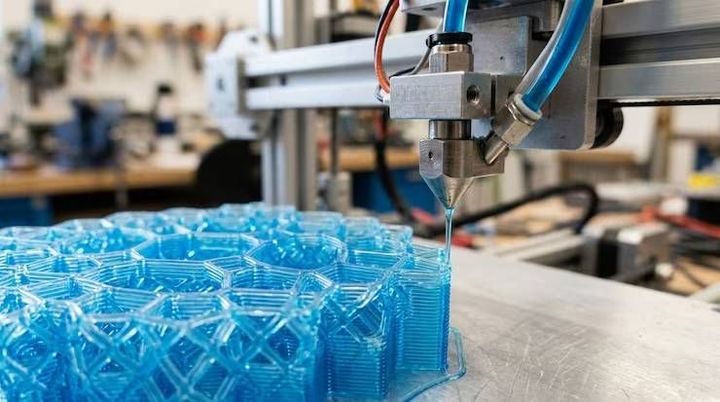
Explore Plastic Extrusion Technology With Processing Methods and Engineering Details
Plastic extrusion technology is a continuous manufacturing process used to transform plastic raw materials into products with a consistent cross-sectional shape.
It is widely applied in the production of pipes, tubes, sheets, films, profiles, insulation materials, and plastic components used in construction, packaging, automotive manufacturing, and electrical applications.
The process typically begins with plastic resin supplied as pellets, granules, or another suitable feedstock. The material enters an extruder, where a rotating screw conveys it through a heated barrel, mixes and melts it, and pushes it through a shaped opening called a die. The extruded material then passes through cooling, sizing, pulling, and cutting equipment, depending on the product being manufactured.
Plastic extrusion technology developed alongside advances in polymer science, screw design, temperature control, and industrial automation. Modern systems can process a variety of thermoplastics while controlling material flow, product dimensions, surface appearance, and production consistency.
Main Types of Plastic Extrusion Processes
Different extrusion methods are used according to the shape, thickness, and properties required in the finished product.
Pipe and tube extrusion produces continuous hollow products used in fluid transport, electrical protection, and industrial applications.
Sheet and film extrusion creates thin or thick plastic layers used in packaging, fabrication, and product protection.
Profile extrusion produces products with fixed cross-sectional shapes, including window frames, channels, seals, and trim components.
Blown film extrusion forms a thin plastic tube that is expanded using air before being cooled and wound.
Co-extrusion combines two or more polymer streams through a shared die to create products with multiple layers or different material properties.
Pelletizing extrusion processes polymer melts into pellets for subsequent manufacturing or material handling.
Each process requires suitable tooling, temperature settings, cooling arrangements, and downstream equipment.
Essential Components of an Extrusion Line
A typical plastic extrusion line contains several interconnected systems.
The hopper feeds material into the extruder, while the screw and heated barrel transport and melt the polymer. The die shapes the molten material, and downstream equipment stabilizes the product before it is collected or cut.
Other components may include:
Feeders for controlling the supply of raw materials.
Screens and melt filters for removing selected contaminants.
Gear pumps for stabilizing melt delivery in suitable applications.
Vacuum sizing tanks for dimensional control of certain hollow products.
Cooling tanks, rollers, or air-cooling arrangements.
Haul-off units that pull material at a controlled speed.
Cutters, winders, and automated inspection systems.
The configuration depends on the polymer, product geometry, required production rate, and dimensional tolerances.
Importance
Why Plastic Extrusion Technology Matters
Plastic extrusion technology supports continuous production of components with consistent dimensions and material properties. Compared with processes that shape individual parts inside separate molds, extrusion is particularly suitable for products that maintain a relatively consistent cross-section along their length.
Manufacturers use extrusion to produce building materials, packaging films, cable insulation, medical tubing, automotive profiles, and protective sheets. The process can also incorporate additives, colorants, reinforcing materials, and recycled polymers when the equipment and formulation are appropriate.
Key Factors Affecting Production Quality
Several engineering variables influence the quality of extruded plastic products. Material temperature, screw speed, melt pressure, die geometry, cooling rate, and pulling speed must work together to maintain dimensional stability.
Common production challenges include:
Uneven wall thickness caused by inconsistent material flow or die alignment.
Surface roughness resulting from unsuitable processing conditions or melt instability.
Bubbles caused by moisture, trapped gases, or volatile substances.
Warping caused by uneven cooling or internal stresses.
Dimensional variation caused by changes in temperature, pressure, or haul-off speed.
Systematic monitoring helps operators identify these problems and adjust the process within the material's recommended operating limits.
Recent Updates
Automation and Intelligent Process Control
During 2024–2026, plastic extrusion technology continued to incorporate digital monitoring, automated controls, and data-based process optimization. Industry developments have included improved melt-pressure monitoring, automated die adjustment, and control systems designed to maintain stable production when material characteristics vary.
These systems can help operators identify process variations earlier and reduce unnecessary material waste. Their effectiveness depends on sensor accuracy, suitable control logic, equipment integration, and the quality of production data.
Recycling and Material Flexibility
Extrusion equipment is increasingly being developed to process recycled polymers and more variable feedstocks. Developments include improved degassing, filtration, screw configurations, and material handling systems intended to manage contamination, moisture, and differences in polymer properties.
Recycled material may require additional sorting, drying, filtration, or blending before extrusion. Its suitability depends on polymer compatibility, contamination levels, previous processing history, and the performance requirements of the finished product.
Energy Efficiency and Process Optimization
Modern extrusion systems increasingly emphasize efficient heating, improved motor control, optimized screw designs, and reduced heat loss. Monitoring energy consumption alongside production output can help identify operating conditions that use excessive energy without improving product quality.
However, energy performance depends on the complete production line, including material preparation, cooling, compressed air where used, and downstream equipment. Changes to processing settings should therefore be evaluated against both product quality and total system performance.
Laws or Policies
Product Safety and Material Compliance
Plastic extrusion manufacturers may need to comply with requirements covering product safety, chemical composition, material identification, and environmental performance. Applicable requirements depend on the intended use and the jurisdiction where the product is manufactured or distributed.
Products intended for drinking-water systems, medical applications, food contact, electrical insulation, or structural use may have additional technical requirements. A polymer that is suitable for general industrial profiles is not automatically appropriate for every regulated application.
Machinery and Workplace Safety
Extrusion lines contain heated surfaces, rotating screws, high-pressure polymer melts, moving rollers, and cutting equipment. Appropriate machine guarding, emergency stops, electrical protection, ventilation, and documented operating procedures help manage these hazards.
Maintenance work should follow suitable isolation procedures before workers access hazardous machinery. Hot barrels, dies, and molten polymers can cause severe burns, so equipment should be handled according to manufacturer instructions and workplace safety requirements.
Environmental Considerations
Plastic manufacturing may be subject to rules concerning waste management, emissions, energy use, and product recycling. Facilities should identify the requirements applicable to their processes and materials.
Scrap recovery can reduce material losses when the recovered polymer remains suitable for reuse. Nevertheless, repeated thermal processing may degrade certain polymers, so recycled material should be evaluated for the intended application.
Tools and Resources
Engineering Calculations and Process Monitoring
Plastic extrusion engineers use calculations and measurement tools to evaluate throughput, dimensions, temperature, pressure, and cooling requirements.
Useful tools include:
Screw-speed and throughput monitoring systems.
Melt-pressure and temperature sensors.
Die-flow simulation software.
Wall-thickness and dimensional measurement instruments.
Cooling-system monitoring equipment.
Material moisture analyzers.
Energy consumption meters.
These tools help operators connect process conditions with product characteristics and identify changes that may require corrective action.
Example of Extrusion Line Monitoring
Consider a pipe extrusion line that produces a continuous plastic tube. If the haul-off speed increases without a corresponding adjustment to material output, the pipe may become thinner. If cooling is uneven, the product may develop dimensional variation or internal stresses.
A basic monitoring table can help organize operating observations.
Parameter | Measurement or observation | Purpose |
|---|---|---|
Barrel temperature | Temperature by heating zone | Supports controlled melting |
Screw speed | Revolutions per minute | Tracks material processing |
Melt pressure | Pressure near the die | Identifies flow variation |
Haul-off speed | Linear speed of the product | Helps control dimensions |
Cooling temperature | Temperature of cooling medium | Supports dimensional stability |
Final dimensions | Thickness, diameter, or width | Verifies product conformity |
Acceptable operating ranges must be established for the specific polymer, machine, die, and product specification.
Maintenance and Equipment Selection
Before selecting plastic extrusion machinery, manufacturers should assess the polymer type, required output, product dimensions, tolerance limits, available floor space, and downstream processing requirements.
Maintenance planning should cover screw and barrel wear, heater performance, gearbox condition, die cleanliness, cooling systems, sensors, and electrical components. Documenting inspections and production changes helps identify recurring issues and supports consistent operation.
FAQs
What is plastic extrusion technology used for?
Plastic extrusion technology produces continuous products such as pipes, tubes, films, sheets, profiles, and cable insulation. The die determines the product's cross-sectional shape.
What is the difference between single-screw and twin-screw extrusion?
Single-screw extruders use one rotating screw to convey and melt polymer. Twin-screw extruders use two screws and can provide different mixing, feeding, and compounding capabilities depending on their configuration.
Which materials are commonly used in plastic extrusion?
Common materials include polyethylene, polypropylene, polyvinyl chloride, polystyrene, and selected engineering thermoplastics. The appropriate material depends on the product's mechanical, thermal, chemical, and regulatory requirements.
How can extrusion product quality be improved?
Quality can be improved through suitable material preparation, stable temperature control, appropriate screw and die design, consistent cooling, and regular dimensional inspection. Adjustments should be validated against the product specification.
How does plastic extrusion support recycling?
Extrusion can process appropriately prepared recycled polymers into pellets, profiles, sheets, and other products. Material sorting, contamination control, filtration, and thermal stability are important for maintaining suitable output quality.
Conclusion
Plastic extrusion technology transforms polymer materials into continuous products through controlled melting, shaping, cooling, and downstream handling. Product quality depends on the interaction of material properties, screw design, temperature, pressure, die geometry, and cooling conditions. Recent developments in automation, recycling, and process monitoring are expanding manufacturing capabilities. Appropriate engineering design, workplace safety, maintenance, and material compliance remain essential throughout production.

You May Also Like