Erta Ale Volcano Travel Guide With Adventure Planning, Trekking, and Destination Insights
Erta Ale is an active basaltic shield volcano in Ethiopia’s Afar Rift, rising from the Danakil Depression, one of the most geologically unusual landscapes in the region. The volcano is known for its summit caldera, pit craters, lava activity, and remote desert setting.
Erta Ale trekking involves long ground travel, walking over rugged volcanic terrain, exposure to intense heat, and changing environmental conditions. Because volcanic activity and regional security conditions can change, travel planning requires attention to current information rather than relying only on older travel descriptions.
Context
Understanding Erta Ale Volcano
Erta Ale is part of the Afar Rift Volcanic Province, where tectonic plates are gradually moving apart. This geological setting allows magma to rise toward the surface and contributes to the area's volcanic activity. Erta Ale is a broad shield volcano with a summit elevation of about 585 meters and a very large volcanic structure extending across the surrounding landscape.
The summit contains a caldera with smaller pit craters. These depressions can contain molten rock or strong thermal activity, although their appearance and activity level can change. Historical observations have documented persistent lava-lake activity for many decades, making the volcano an important subject for volcanology as well as a destination associated with adventure travel.
The Danakil Depression Setting
Erta Ale is located within the Danakil Depression, a very low-lying desert environment characterized by volcanic formations, salt landscapes, extreme temperatures, and limited infrastructure. The combination of geological features and isolation makes transportation and trekking different from ordinary mountain travel.
A typical Erta Ale travel plan needs to account for long road journeys, rough tracks, limited communications, heat exposure, and basic field conditions. Travelers also need to understand that reaching the volcano is only one part of the journey; conditions around the route can influence the entire itinerary.
What Erta Ale Trekking Involves
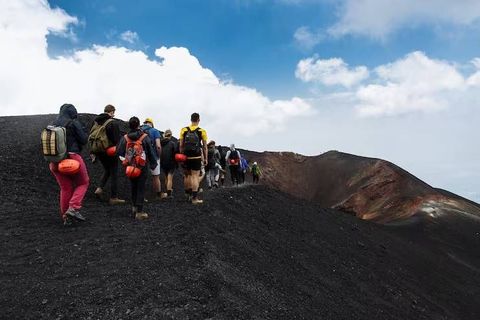
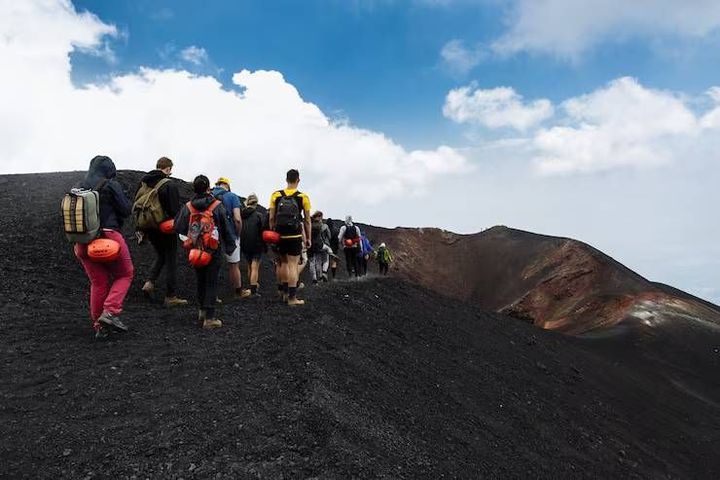
Erta Ale trekking generally means walking across dark volcanic ground toward the summit area, often during cooler periods rather than the hottest part of the day. The terrain may include loose rocks, uneven surfaces, steep sections, and areas affected by recent volcanic activity.
The physical demands depend on the route, weather, group arrangements, and current access conditions. A person planning the journey should consider walking ability, hydration requirements, footwear, protective clothing, and the possibility of itinerary changes.
Importance
Why the Destination Matters
Erta Ale provides an opportunity to observe an active volcanic environment within a larger rift system. Its geology helps illustrate how volcanic landscapes develop when the Earth's crust is stretched and fractured.
For travelers, the destination also demonstrates how adventure tourism can involve environments that are substantially different from conventional sightseeing. There are few permanent facilities around the volcano, so planning must account for environmental exposure and logistical limitations.
Who Should Understand the Conditions
The destination can be relevant to several groups:
- Travelers interested in volcanic landscapes and geological tourism
- Experienced trekkers seeking remote desert environments
- Photography enthusiasts interested in natural landscapes
- Students studying earth science, geography, or volcanology
- Researchers and educational groups examining rift-related geological features
However, interest in volcano travel should not be confused with guaranteed access to an active crater. Volcanic conditions can change rapidly, and authorities or local operators may restrict movement when circumstances require it.
Practical Planning Factors
A basic planning checklist can include:
| Planning factor | What to consider |
|---|---|
| Terrain | Loose volcanic rock, uneven surfaces and slopes |
| Climate | Intense heat and limited shade |
| Water | Carry adequate drinking water for the itinerary |
| Clothing | Lightweight layers with protection from sun and dust |
| Footwear | Durable footwear suitable for rocky ground |
| Navigation | Organized route planning and local guidance |
| Communications | Limited connectivity in remote areas |
| Volcano activity | Check current monitoring information |
| Security | Review current regional travel restrictions |
| Transport | Prepare for long journeys on rough roads |
These factors are particularly important because the Danakil region has limited infrastructure compared with established tourism destinations.
Recent Updates
Volcanic Activity From 2024 to 2026
Erta Ale remained volcanically active during the recent period. Smithsonian Global Volcanism Program reports documented thermal anomalies and lava-flow activity during 2024, including activity in the northern and southern pit-crater areas. Satellite observations also recorded lava movement during several periods.
Activity continued into 2025. Satellite observations identified thermal anomalies at both major pit-crater areas, while field and satellite observations also documented changes in the volcanic surface. The Global Volcanism Program lists 2025 as Erta Ale's latest known eruption year.
The broader Afar volcanic environment also experienced a significant development in 2025 when Hayli Gubbi, another volcano in the region, produced an eruption with a substantial ash plume. This event reinforced the importance of monitoring volcanic conditions when planning travel within the wider Afar area.
Current Travel Environment
Travel conditions in Afar have also become an important part of planning. Current government travel guidance identifies security restrictions affecting parts of Afar and notes that authorities can impose travel restrictions at short notice. The UK government currently advises against all but essential travel to the rest of Afar and against all travel in specified border areas.
The U.S. Department of State similarly advises reconsidering travel to Ethiopia and identifies specific parts of Afar where it advises against travel. Its current guidance also highlights risks associated with armed conflict, crime, kidnapping, communications disruptions, and changing local conditions.
These developments mean an Erta Ale travel guide should be treated as a planning framework rather than a guarantee that a particular route will be operating.
Laws or Policies
Travel Rules and Regional Restrictions
Erta Ale is located in Ethiopia's Afar Region, so travelers are subject to Ethiopian immigration requirements, local authority decisions, security restrictions, and any access controls applying to the area.
Foreign visitors should verify current entry requirements before departure. Travel advisories can also change independently of volcanic activity, particularly when security conditions develop in northern Ethiopia.
Access to Remote Areas
Remote desert travel may involve checkpoints, controlled routes, local authorities, and organized transportation. Conditions can change without much notice, so travelers should follow instructions from relevant authorities and their organized travel arrangements.
Current UK guidance states that foreign nationals are currently unable to travel to airports in Afar regional state because of restrictions imposed by Ethiopian authorities, while travel restrictions may also be implemented elsewhere at short notice.
Safety Around Active Volcanic Areas
An active volcano should never be treated like a conventional hiking destination. Lava, volcanic gases, unstable ground, sudden changes in activity, ash, and extreme heat can create hazards even when the volcano appears visually calm.
Current volcanic monitoring information should therefore be checked before an itinerary is finalized. The Smithsonian Global Volcanism Program maintains activity information and historical records for Erta Ale.
Tools and Resources
Volcano Monitoring Resources
Volcanic monitoring databases can help travelers understand recent activity patterns. The Smithsonian Global Volcanism Program provides volcano profiles, eruption histories, activity reports, and information about recent observations.
Satellite-based observations are also useful because remote volcanoes can be difficult to monitor continuously from the ground. However, satellite information should be interpreted alongside official local instructions rather than treated as a standalone travel clearance.
Travel Planning Tools
Useful planning resources include:
- Official Ethiopian immigration information for entry requirements
- Government travel-advisory pages for current regional conditions
- Volcano monitoring databases for recent activity
- Offline maps for areas with limited connectivity
- Weather forecasting tools for heat and desert conditions
- Travel insurance documents covering the relevant destination and activities
- Emergency contact information stored offline
Travelers should also keep copies of important documents and itinerary details where they can be accessed without an internet connection.
FAQs
Is Erta Ale Volcano currently active?
Yes. Erta Ale is an active volcano, and recent monitoring has recorded thermal anomalies and eruptive activity. Its activity can change, so current volcanic information is more useful than assuming that conditions from an earlier trip remain unchanged.
What is Erta Ale trekking like?
Erta Ale trekking generally involves walking across rugged volcanic terrain in a remote desert environment. Heat, loose rocks, limited shade, and changing volcanic conditions are important factors when planning the route.
Is Erta Ale travel currently straightforward?
No single travel condition can be assumed for all periods. Current government guidance identifies security and access restrictions affecting parts of Afar, and authorities can change travel arrangements at short notice.
What should travelers consider for an Erta Ale travel guide?
An Erta Ale travel guide should cover transport, trekking conditions, water, clothing, communications, volcanic activity, regional security, entry requirements, and contingency planning. The remote setting makes these factors particularly important.
Why is Erta Ale important for geology?
Erta Ale is part of the Afar Rift Volcanic Province, a region associated with active crustal stretching and volcanic processes. Its shield structure, caldera, pit craters, lava flows, and long history of thermal activity make it significant for understanding volcanic and rift environments.
Conclusion
Erta Ale is an active shield volcano situated within the geologically distinctive Danakil Depression of Ethiopia's Afar Region. Its volcanic activity, remote terrain, and demanding desert environment make trekking fundamentally different from ordinary sightseeing. Recent monitoring confirms continued volcanic activity, while current regional conditions also make security and access information essential parts of travel planning.