Air Systems Guide With Modern Airflow Technology and Engineering Solutions
Air systems are engineered arrangements of equipment and components that move, distribute, filter, heat, cool, or regulate air within buildings and industrial environments.
They are used in residential properties, commercial buildings, manufacturing facilities, hospitals, laboratories, warehouses, and transportation infrastructure. An air systems guide helps readers understand how airflow technology works, which components influence performance, and how engineering decisions affect indoor conditions and industrial processes.
Modern air systems combine mechanical equipment, ductwork, filters, sensors, and control systems to manage air movement according to specific requirements. Depending on the application, a system may focus on ventilation, temperature regulation, humidity control, contaminant removal, or the delivery of air to production equipment.
Airflow engineering has developed alongside advances in building design, industrial automation, and energy management. Traditional ventilation arrangements relied heavily on natural air movement and basic mechanical fans, while modern installations may incorporate variable-speed motors, automated controls, pressure sensors, and connected monitoring equipment.
Main Types of Air Systems
Air systems differ according to their intended function and operating environment. Understanding these categories helps explain why equipment designed for a residential building may not be suitable for an industrial production facility.
Ventilation systems introduce outdoor air and remove indoor air to support air exchange.
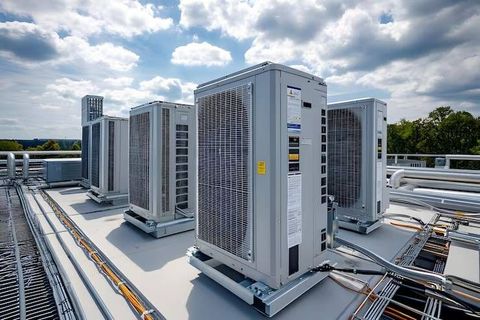
Heating, ventilation, and air conditioning (HVAC) systems regulate indoor temperature, airflow, and, where designed, humidity.
Compressed air systems supply pressurized air to pneumatic tools, machinery, and production equipment.
Industrial extraction systems capture dust, fumes, or airborne particles near their source.
Cleanroom air systems manage filtration, airflow patterns, and pressure differences in controlled environments.
Process air systems deliver air with specified temperature, pressure, or moisture characteristics for manufacturing operations.
Each category has different design requirements, operating pressures, filtration needs, and maintenance procedures.
Essential Air System Components
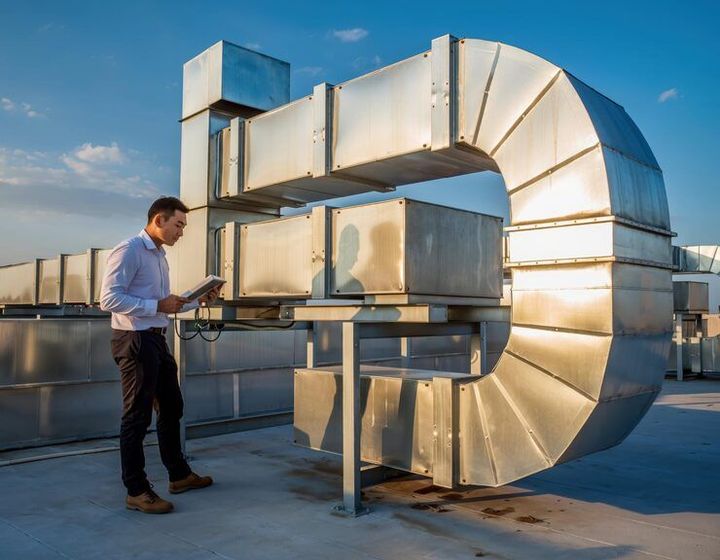
A typical mechanical air distribution system may contain several interconnected components. Fans or blowers move air, ducts transport it, filters remove selected airborne particles, and dampers regulate distribution. Sensors and controllers help maintain operating conditions within specified ranges.
Depending on the installation, additional components may include heat exchangers, cooling coils, heating elements, humidifiers, dehumidifiers, silencers, and pressure regulators. The selection and arrangement of these components determine how effectively a system meets its intended purpose.
Importance
Why Modern Airflow Engineering Matters
Air systems influence indoor comfort, ventilation, production quality, equipment reliability, and energy consumption. In occupied buildings, suitable ventilation helps manage indoor air conditions, while industrial systems may be necessary to control airborne contaminants or provide air for specific manufacturing processes.
Poor airflow can contribute to uneven temperatures, inadequate ventilation, excessive noise, dust accumulation, and unnecessary energy use. In industrial environments, insufficient extraction or incorrect pressure conditions can also interfere with production processes and workplace safety.
Modern airflow engineering addresses these challenges by matching equipment capacity with actual requirements. Appropriate duct sizing, effective filtration, correctly selected fans, and suitable controls can help maintain consistent operation.
Applications Across Industries
Air systems support a wide range of sectors, including:
Manufacturing, where pneumatic equipment and process ventilation support production activities.
Healthcare, where ventilation and filtration requirements depend on the room's intended function.
Food processing, where air conditions may influence hygiene and product handling.
Electronics manufacturing, where controlled environmental conditions can be important for sensitive components.
Commercial buildings, where ventilation and temperature regulation support occupants.
Warehousing, where air distribution can help manage heat and environmental conditions.
Laboratories, where extraction and pressure control may be required for specific activities.
Requirements vary substantially between these environments. A system designed for general comfort ventilation cannot automatically be assumed to meet the specialized requirements of a laboratory or industrial extraction application.
Key Factors Affecting Performance
Air system performance depends on equipment selection, installation quality, operating conditions, and maintenance. Engineers typically consider airflow volume, static pressure, temperature, humidity, filtration efficiency, noise, and energy demand.
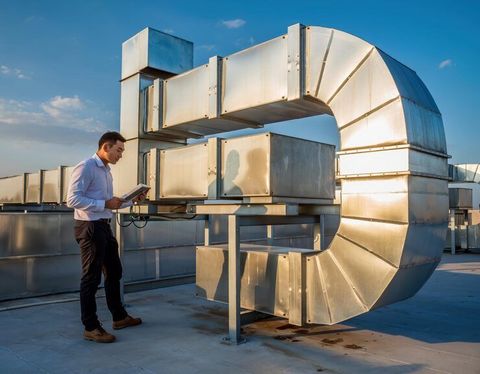
Duct geometry also matters. Sharp bends, restrictive fittings, leaks, and poorly balanced branches can increase resistance or create uneven airflow. Proper commissioning helps confirm whether the installed system operates according to its design specifications.
Recent Updates
Energy-Efficient Airflow Technology
During 2024–2026, energy efficiency remained an important consideration in HVAC and industrial air system design. Variable-speed drives, electronically commutated motors, improved fan designs, and more responsive controls can help adjust equipment output to changing demand.
Instead of operating continuously at full capacity, suitable systems can vary fan speed or equipment operation according to measured conditions. The resulting energy performance depends on system design, control settings, operating schedules, and the characteristics of the equipment.
Smart Sensors and Automated Controls
Connected sensors and building management systems are increasingly used to monitor temperature, pressure, humidity, equipment status, and other operating variables. This information can help operators identify unusual conditions and adjust airflow more accurately.
Some systems use automated control logic to coordinate fans, dampers, and heating or cooling equipment. However, sensor accuracy, calibration, communication reliability, and appropriate control programming remain essential for dependable results.
Filtration and Indoor Air Quality
Indoor air quality continues to receive attention in building design and facility management. Modern ventilation systems may use different filtration technologies according to the type and size of airborne particles that need to be controlled.
High-efficiency particulate air (HEPA) filters are used in applications requiring substantial particle removal, but they create additional airflow resistance and must be compatible with the equipment. Filter selection should consider the intended application, pressure drop, maintenance requirements, and relevant engineering standards.
Predictive Maintenance
Digital monitoring can help detect changes in fan vibration, motor temperature, pressure, or airflow that may indicate developing equipment problems. When interpreted correctly, these measurements can support condition-based maintenance and reduce unexpected interruptions.
Predictive maintenance does not eliminate the need for physical inspections. Mechanical wear, damaged ductwork, blocked filters, loose connections, and sensor faults may require direct examination.
Laws or Policies
Building Ventilation and Mechanical Safety
Air systems are subject to building codes, mechanical safety requirements, electrical rules, fire protection provisions, and occupational safety regulations applicable to their location and use. Requirements may differ between residential buildings, industrial plants, healthcare facilities, and controlled environments.
Designers and facility operators need to consider applicable ventilation rates, equipment installation requirements, fire and smoke control, electrical protection, and access for maintenance. Industrial extraction systems may also need to comply with workplace requirements for controlling hazardous airborne substances.
Energy Efficiency and Environmental Requirements
Some jurisdictions establish minimum efficiency requirements for fans, motors, HVAC equipment, or building energy performance. Refrigeration and air-conditioning systems may also be subject to requirements concerning refrigerant handling, leakage prevention, and environmental impact.
The applicable requirements depend on the equipment category, installation type, and jurisdiction. Engineering documentation should identify the standards and regulations relevant to the specific project rather than assuming that one standard applies to every air system.
Workplace Safety and Maintenance
Industrial air systems may involve rotating machinery, pressurized equipment, electrical hazards, and airborne contaminants. Maintenance procedures should account for these risks, including isolation of hazardous energy sources and depressurization where necessary.
Facilities should maintain appropriate operating records, inspection schedules, and equipment documentation. Specialized systems may require inspections or performance verification by qualified personnel.
Tools and Resources
Airflow Calculation and Design Tools
Airflow calculations help engineers estimate the amount of air required for a particular space or process. Common measurements include cubic metres per hour (m³/h), litres per second (L/s), and cubic feet per minute (CFM).
For example, a simple ventilation calculation can estimate airflow using room volume and the intended air changes per hour:
Airflow (m³/h) = Room volume (m³) × Air changes per hour
For a room measuring 100 m³ with a target of six air changes per hour, the calculated airflow is 600 m³/h. This is a simplified example, not a universal ventilation requirement; actual design must account for occupancy, contaminants, pressure relationships, applicable standards, and system performance.
Other useful engineering tools include duct sizing calculators, fan selection charts, pressure-drop calculators, psychrometric charts, and HVAC load calculation software.
Monitoring and Diagnostic Equipment
Air system technicians and engineers may use several instruments to assess performance:
Anemometers measure air velocity.
Differential pressure gauges measure pressure differences across filters or components.
Manometers measure pressure in suitable applications.
Temperature and humidity sensors monitor environmental conditions.
Particle counters assess airborne particle concentrations.
Vibration analyzers help evaluate rotating equipment.
Electrical meters assess relevant electrical operating parameters.
Measurements should be taken using suitable instruments and interpreted according to the equipment's operating requirements.
Maintenance Planning
A structured maintenance schedule helps track filter replacement, fan inspections, belt condition, motor performance, duct cleanliness, and control calibration. The frequency of each task depends on equipment design, operating hours, environmental conditions, and manufacturer guidance.
Maintenance records can include the inspection date, measured readings, identified defects, corrective work, and follow-up observations. Comparing historical measurements can help reveal gradual changes that might otherwise go unnoticed.
FAQs
What are the main types of air systems?
Common types include HVAC systems, ventilation systems, compressed air installations, industrial extraction systems, cleanroom systems, and process air systems. Each serves different requirements for airflow, pressure, filtration, or environmental control.
How does modern airflow technology improve system performance?
Variable-speed motors, automated controls, sensors, and improved fan designs can help match airflow to changing demand. Actual improvements depend on correct design, installation, commissioning, and maintenance.
How is airflow calculated in an air system?
Airflow can be calculated using room volume and the required air changes per hour for a simplified ventilation estimate. More detailed applications may require calculations involving air velocity, duct dimensions, pressure losses, and process requirements.
How often should air system filters be replaced?
Filter replacement frequency depends on the filter type, operating environment, pressure drop, and manufacturer recommendations. Monitoring filter condition can help determine when replacement or inspection is necessary.
Which tools are used to inspect industrial air systems?
Common tools include anemometers, differential pressure gauges, temperature sensors, vibration analyzers, and electrical meters. The appropriate instruments depend on the equipment and the operating conditions being evaluated.
Conclusion
Modern air systems combine mechanical equipment, airflow engineering, filtration, and automated controls to support building environments and industrial processes. Their performance depends on appropriate equipment selection, accurate design calculations, effective commissioning, and regular maintenance. Developments in energy-efficient motors, digital monitoring, and filtration technology continue to influence system design. Applicable safety, building, environmental, and workplace requirements remain important considerations throughout installation and operation.